Bantolinao
Diospyros ferrea
Also known as: Blackwood, Batulinao, Batulinau, Kanumay, Bantulinao
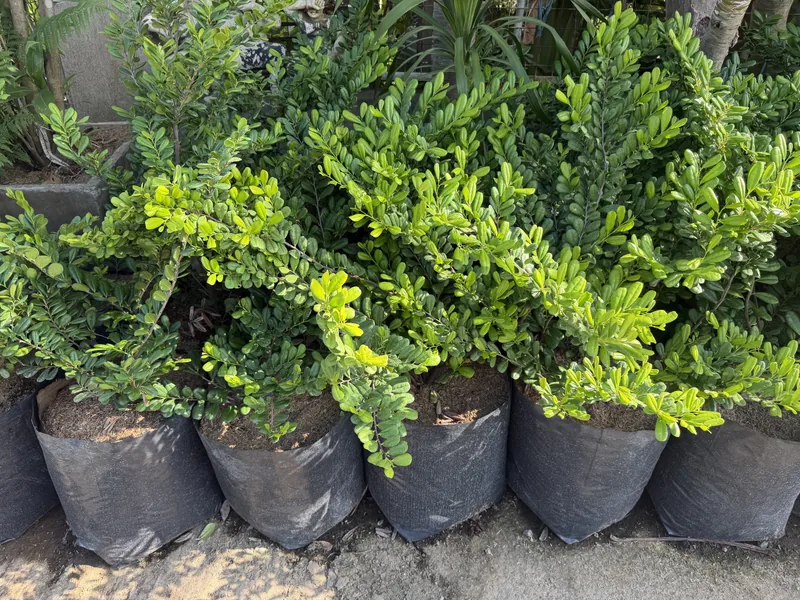
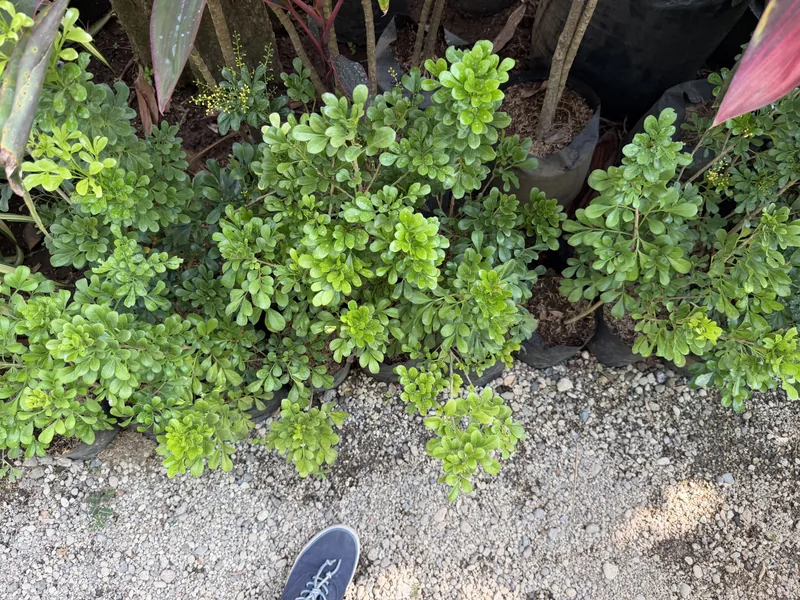
Native Philippine evergreen with dense small dark green leaves. Slow-growing, salt-tolerant hedge plant locally known as Bantolinao or Blackwood. Sourced at 1.5 ft landscape stock for hedges, low borders, and coastal landscapes.
Pricing Guide (per plant)
| Size / Spec | Price (PHP) |
|---|---|
| 1.5 ft | ₱280 |
Volume Discounts
- 50–100 plants:5%
- 101–300 plants:8-10%
- 301+ plants:Project-specific pricing
Prices reflect plant only. Delivery, planting, and establishment service quoted per project. Volume pricing applies to bulk hedge orders. Bantolinao is slow-growing; plan installation timelines accordingly.
Request Project Quote →About Bantolinao
Bantolinao (Diospyros ferrea) is a native Philippine evergreen widely used as a hedge plant in landscape projects. The species occurs naturally from SW India and Sri Lanka through Indo-China to the SW Pacific, including the Philippines, where it is rooted in the seasonally dry tropical biome.[^1] In commercial nursery supply it is sold as a slow-growing dense hedge with small dark green leaves. The same species is the source of the 'black ebony' heartwood referenced in regional timber records, but landscape-grade stock is sold for its foliage character, not for timber.
Common Applications
- Boundary and screening hedges. Densely planted at 30-45 cm centers to form a dark-green low to mid-height screen.
- Low formal hedges and parterres. Pruned to 30-60 cm for formal residential and resort plantings where a fine-textured native hedge is preferred over imported boxwood.
- Coastal residential landscapes. Salt and wind tolerance from native coastal habitat make it a sound replacement for exotics that struggle near the shore.
- Native and biodiversity-led plantings. Specified on projects with a native-species brief by ecological landscape designers.
- Pool-deck low borders. Small leaves and absence of significant fruit drop at hedge height keep the plant pool-safe.
Where You'll See It
- Coastal residential gardens across Luzon and the Visayas
- Resort landscapes specifying native or salt-tolerant hedging
- Modern formal gardens where bantolinao is used as a native alternative to boxwood
- Subdivision common-area planting beds and median strips
Why Architects Choose It
- Native species, supports biodiversity briefs and reduces invasive-plant risk
- Salt and drought tolerance from coastal Philippine habitat
- Slow growth means a planted hedge holds its line with minimal trimming
- Dense small leaves and dark green color give a refined, formal-leaning hedge texture
- Pool-safe at hedge height; no fruit drop, no aggressive root system in landscape stock
Project Types Best Suited
- Coastal residential gardens
- Resort and hospitality landscapes
- Modern formal gardens
- Native and ecological landscape projects
- Subdivision and common-area landscaping
Specifications
- Botanical name
- Diospyros ferrea (Willd.) Bakh.
- Family
- Ebenaceae
- Native range
- SW India, Sri Lanka, Indo-China to SW Pacific (incl. Philippines)
- Habit
- Small evergreen shrub or tree
- Sourced height
- 1.5 ft (landscape stock)
- Maintained hedge height
- 1-2 m typical; can be pruned lower for formal hedging
- Leaves
- Oblong to obovate, 2-4 cm long, leathery, glabrous, dark green
- Flowers
- Urn-shaped, 6-8.5 mm; dioecious (separate male and female plants)
- Fruit
- Ellipsoid berries, 8-13 mm; rare on hedge-pruned stock
- Growth rate
- Slow
- Sun
- Full sun preferred
- Water
- Low; drought-tolerant once established
- Soil
- Adaptable; well-drained preferred
- Salt tolerance
- Good; native to coastal habitat
- Pool safe
- Yes at hedge height
Bantolinao (Diospyros ferrea) Hedge Plant Supplier
Bantolinao, also known locally as Blackwood, is a native Philippine evergreen used as a slow-growing dense hedge in landscape projects. The same species, Diospyros ferrea, is the source of the regional “black ebony” timber reported in Southeast Asian timber records,1 but landscape-grade nursery stock is grown for its foliage and form, not for wood.
Identity and Local Names
In Tagalog, the species is most commonly called Bantolinao, with variants Batulinao and Batulinau. In Cebu-Bisayan it is known as Kanumay. In English-language trade across Philippine nurseries, the same plant is often labeled Blackwood, a translation of “black ebony.”2
The species was formally described by C. von Linné as Pisonia buxifolia, later moved through the genera Maba and Ferreola, and stabilized under the current accepted name Diospyros ferrea (Willd.) Bakh.3 All older names refer to the same plant.
Native Range and Habitat
Per Plants of the World Online (Royal Botanic Gardens, Kew), Diospyros ferrea is native from SW India and Sri Lanka through Indo-China and Malesia to the SW Pacific, with the Philippines firmly within the native range. The species inhabits the seasonally dry tropical biome, which informs its strong drought and salt tolerance in cultivation.3
Form and Foliage
Bantolinao is a small evergreen tree or shrub, sometimes procumbent, slow-growing, with dense branching that responds well to hedge shaping. Leaves are oblong to obovate, 2-4 cm long, leathery and glabrous, dark green and glossy, giving the plant a fine-textured formal hedge character similar to imported boxwood but native to the country.1
In landscape stock, fruit set is rare on hedge-pruned plants because flowering reduces under regular trimming and because the species is dioecious; mature reproductive specimens are uncommon in supply.
Landscape Use in the Philippines
Common installations include:
- Boundary and screening hedges at 30-45 cm spacing
- Formal low parterres maintained at 30-60 cm height
- Coastal residential and resort landscapes where salt tolerance matters
- Native-species and biodiversity briefs as a substitute for non-native hedge plants
- Pool-deck and pool-bed low borders where leaf and fruit drop discipline matters
Why Specify Bantolinao
Native species. Native PH origin supports biodiversity-led design briefs and reduces invasive-plant risk that comes with several imported hedge alternatives.
Salt and drought tolerance. Native coastal habitat translates into proven performance in beachfront and breezy near-shore gardens.
Slow growth as a feature. Once a hedge reaches its target height, slow growth means it holds the line with minimal trimming, lowering the maintenance load over the project lifecycle.
Refined hedge texture. Small dark green leaves and dense branching give a formal hedge appearance that is hard to match among other PH-grown native shrubs.
Care Notes
- Sun: full sun preferred for the densest hedge form
- Water: consistent moisture during the first 6-8 weeks, then drought-tolerant
- Soil: adaptable; well-drained preferred
- Pruning: light shaping a few times per year; the slow growth rate keeps trimming demand low
- Pests/disease: broadly trouble-free in standard landscape conditions
Sources
Footnotes
-
Stuart, Godofredo U. Jr. “Bantolinao, Bantulinao, Diospyros ferrea, Black ebony.” StuartXchange Philippine Medicinal Plants. Accessed 2026. https://www.stuartxchange.org/Bantolinao.html ↩ ↩2
-
Wikipedia contributors. “Diospyros ferrea.” Wikipedia. Accessed 2026. https://en.wikipedia.org/wiki/Diospyros_ferrea ↩
-
Plants of the World Online (POWO), Royal Botanic Gardens, Kew. “Diospyros ferrea (Willd.) Bakh.” Accessed 2026. https://powo.science.kew.org/taxon/urn:lsid:ipni.org:names:322393-1 ↩ ↩2
Sourcing & Supply
Origin
Direct from Luzon nursery growers producing bantolinao as a landscape hedge crop. Stock is grown out from cuttings and seedlings under shade for the first stage and hardened off in full sun before sale.
Supplier Relationship
Working relationships with growers who supply bantolinao at landscape-stock heights. Bulk hedge orders are coordinated with multiple growers when single-yard inventory is short.
Quality Control
Plants delivered in healthy nursery bags with intact root systems, no leaf-drop, no obvious pest or fungal damage. Slow-grown stock with even branching is preferred for hedge installations.
Frequently Asked Questions
How much does Bantolinao cost in the Philippines?
Landscape stock at 1.5 ft retails at ₱280 per plant. Volume discounts apply on bulk hedge orders starting at 50 plants. Delivery and planting are quoted separately.
Is Bantolinao the same as Blackwood?
Yes. 'Blackwood' is a trade name commonly used in Philippine nurseries; 'Bantolinao' is the local Filipino name for Diospyros ferrea, the native source of black ebony heartwood. Other local names include Batulinao, Batulinau, and Kanumay (Cebuano-Bisayan).
Is Bantolinao native to the Philippines?
Yes. Diospyros ferrea occurs naturally from SW India and Sri Lanka through Indo-China to the SW Pacific, with the Philippines firmly within its native range per Plants of the World Online (Royal Botanic Gardens, Kew).
How do I space Bantolinao for a hedge?
Plant at 30-45 cm centers for a dense, formal hedge that fills in within 12-18 months. Wider spacing (45-60 cm) saves on plant count but takes longer to close. Slow growth rate means closer spacing pays off when a defined hedge line is needed quickly.
Will Bantolinao tolerate coastal exposure?
Yes. The species is native to seasonally dry tropical biome including coastal areas, and tolerates wind and salt better than most imported hedge plants. It is a strong choice for beachfront, near-shore, and breezy coastal residential gardens.
How tall does Bantolinao grow?
Diospyros ferrea is botanically a small evergreen tree or shrub in habitat. As a landscape hedge it is typically held at 1-2 m by occasional shaping. Slow growth means once it reaches the desired hedge height, it stays there with minimal trimming.
Is Bantolinao pool safe?
Yes at hedge height. Small leaves, no significant fruit drop on hedge-pruned stock, and a non-invasive root habit at landscape scale. A common pool-deck and pool-bed hedge in modern Philippine landscapes.
How long does it take to fill in a hedge?
Plan 12-18 months for a dense closed hedge from 1.5 ft starts at 30-45 cm spacing. Slow growth is part of the species character; fast-growing alternatives lose the formal fine-leaved look that bantolinao provides.