Calathea Zebrina
Goeppertia zebrina
Also known as: Zebra Plant, Calathea Zebra, Calathea zebrina
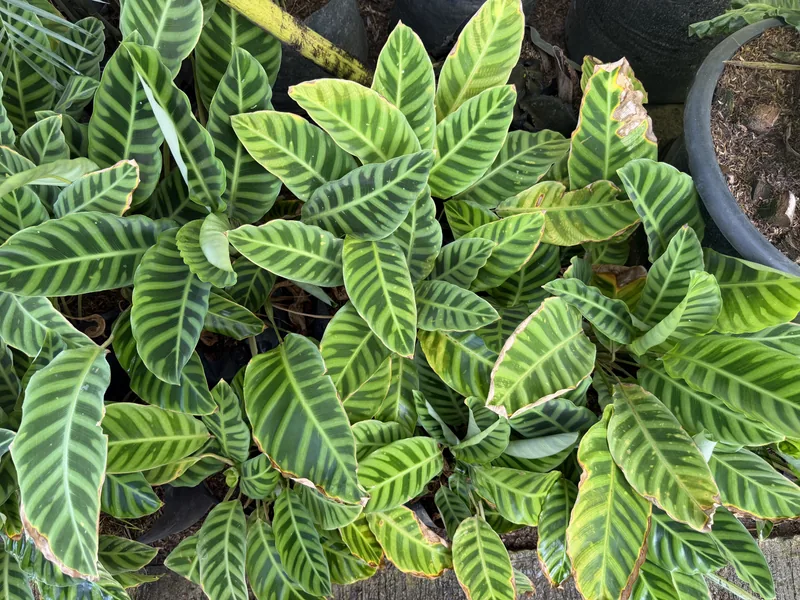
Velvety dark green leaves striped with lime green and backed in deep purple. The classic Zebra Plant for shaded interior accents, tropical understory beds, and humid courtyard plantings. Sourced at 1.5 ft for ₱150 per plant.
Pricing Guide (per clump)
| Size / Spec | Price (PHP) |
|---|---|
| 1.5 ft | ₱150 |
Volume Discounts
- 25–100 plants:5%
- 101–300 plants:8-10%
- 301+ plants:Project-specific pricing
Prices reflect plant only. Delivery and installation quoted per project. Bulk pricing available for hospitality and corporate interior orders. Plants ship in nursery pots; decorative pottery quoted separately.
Request Project Quote →About Calathea Zebrina
Calathea Zebrina (Goeppertia zebrina) is a clumping evergreen perennial from the Atlantic Forest of southeastern Brazil, prized for velvety leaves boldly striped in dark green and lime green with deep purple undersides.[^1] The species earned the Royal Horticultural Society's Award of Garden Merit and is one of the most recognized shade-loving foliage plants in tropical interiors and courtyards. In Philippine landscape and interiorscape projects, it is specified for its dramatic foliage texture in shaded positions where flowering plants underperform.
Common Applications
- Indoor accent and tabletop placement. Single specimen or small grouping in offices, lobbies, and residential interiors with bright indirect light.
- Shaded courtyard understory. Mass-planted at 30-45 cm centers in shaded beds beneath canopy or pergola structures.
- Atrium and corporate interior plantings. Grouped clumps in malls, hotel lobbies, and corporate offices for high-humidity, low-light positions.
- Bathroom and ensuite styling. Higher humidity from showers suits the plant; pairs visually with dark stone and pale wall finishes.
- Tropical garden understory. Underplanting beneath palms, ferns, and large-leaf foliage where dappled or filtered light prevails.
Where You'll See It
- Hotel lobby and atrium plantings in Makati and BGC
- Mall courtyards and indoor garden zones
- Residential interiors with bright indirect light
- Shaded subdivision common areas under mature canopy
- Resort spa courtyards and treatment-room interiors
Why Architects Choose It
- Distinctive zebra-stripe foliage that no other commonly-supplied tropical plant matches
- Holds dramatic visual interest in shaded positions where flowering plants fail
- Pet-safe (non-toxic to cats, dogs, and horses) for residential and hospitality clients
- Naturally suited to Philippine humidity, performs well outside greenhouse conditions
- Award of Garden Merit recognition signals reliable horticultural performance
Project Types Best Suited
- Hospitality and hotel interior plantings
- Corporate office and atrium gardens
- Residential interior styling
- Mall and retail courtyard plantings
- Shaded outdoor courtyard understory
- Resort spa and treatment-room interiors
Specifications
- Botanical name (popular)
- Calathea zebrina
- Botanical name (POWO accepted)
- Goeppertia zebrina (Sims) Nees
- Family
- Marantaceae
- Native range
- Southeastern Brazil (Bahia to Santa Catarina)
- Habit
- Clumping evergreen perennial herb
- Sourced size
- 1.5 ft (potted clump)
- Mature size in cultivation
- 1-3 ft tall, 1-2 ft wide
- Leaves
- Elliptical to oblong, 15-20 in long, velvety dark green with lime-green stripes; deep purple undersides
- Flowers
- Small white or violet with violet-brown bracts; rarely flowers indoors
- Growth rate
- Moderate
- Sun
- Bright indirect light; will scorch in direct sun
- Water
- Keep moist; avoid soggy soil; rain or distilled water preferred (fluoride-sensitive)
- Humidity
- 60% or higher; well-suited to Philippine ambient humidity
- Minimum temperature
- 16°C (61°F)
- Soil
- Peat-based potting mix with high organic content; well-drained
- Pet safe
- Yes (non-toxic to cats, dogs, and horses per ASPCA-aligned references)
- Pool safe
- No (humidity-loving, not for full-sun pool decks)
- Salt tolerant
- No
- RHS distinction
- Award of Garden Merit
Calathea Zebrina (Zebra Plant) Supplier
Calathea Zebrina, more recently reclassified as Goeppertia zebrina under current taxonomy, is a clumping evergreen perennial from the Atlantic Forest of southeastern Brazil. The species is one of the most recognized shade-loving foliage plants in tropical horticulture, prized for velvety leaves striped in dark green and lime green with deep purple undersides.1 2
Identity and Trade Names
The plant is universally sold and searched as Calathea Zebrina or simply Zebra Plant. Plants of the World Online now lists Goeppertia zebrina (Sims) Nees as the accepted scientific name, with Calathea zebrina as a homotypic synonym.1 In horticultural trade and gardening references, the older Calathea name remains the dominant term.
Native Habitat
The species is native to southeastern Brazil, occurring naturally from Bahia south to Santa Catarina in the Atlantic Forest understory.1 This origin matters for cultivation: the plant evolved under canopy in a wet tropical biome, which translates directly to its cultivation requirements of bright indirect light and high humidity.
Foliage Character
The plant’s signature feature is the leaf. Elliptical to oblong leaves up to 50 cm long are velvety dark green with bold lime-green stripes following the lateral veins, undersides deep purple to dark red.2 3 The contrast catches angled light dramatically, especially in mass plantings.
The Latin epithet zebrina means “with stripes like a zebra,” coined for exactly this leaf pattern.2
Landscape and Interior Use in the Philippines
The plant performs well across Philippine projects in the following positions:
- Hotel lobby and atrium plantings with bright indirect light and conditioned humidity
- Corporate office interiors as accent or grouped clumps near windows
- Mall courtyards in shaded planters under skylights
- Shaded outdoor understory beneath canopy, pergolas, or covered courtyards
- Residential interiors as a tabletop or floor specimen in bright indirect positions
- Resort spa interiors where ambient humidity from water features supports leaf health
It does not belong in full sun, exposed pool decks, or open beachfront landscapes. Direct sun scorches leaves within hours.
Why Specify Calathea Zebrina
Foliage drama in shade. Few commonly-supplied plants offer this combination of velvety texture, bold zebra striping, and purple undersides. The visual character holds in low-light positions where flowering plants struggle.
Pet-safe. The species is non-toxic to cats, dogs, and horses,3 which separates it from many indoor plants in the Araceae family that are toxic to pets — a reliable selling point in residential and hospitality contexts.
Naturally suited to PH humidity. Indoor humidity issues that plague Calatheas in temperate climates are largely absent in Philippine interiors, especially during wet season.
RHS Award of Garden Merit. The Royal Horticultural Society distinction reflects horticultural reliability, not novelty. The plant performs predictably when given proper conditions.
Care Highlights
- Light: bright indirect, never direct sun
- Water: keep evenly moist with rainwater or distilled water (fluoride-sensitive)
- Humidity: 60% or higher
- Soil: peat-rich, well-drained
- Temperature: above 16°C (rarely an issue in PH)
- Common problems: spider mites, leaf-edge browning from tap water or low humidity
Sources
Footnotes
-
Plants of the World Online (POWO), Royal Botanic Gardens, Kew. “Goeppertia zebrina (Sims) Nees.” Accessed 2026. https://powo.science.kew.org/taxon/urn:lsid:ipni.org:names:796810-1 ↩ ↩2 ↩3
-
Wikipedia contributors. “Goeppertia zebrina.” Wikipedia. Accessed 2026. https://en.wikipedia.org/wiki/Goeppertia_zebrina ↩ ↩2 ↩3
-
NC State Extension Plant Toolbox. “Calathea zebrina.” North Carolina State University. Accessed 2026. https://plants.ces.ncsu.edu/plants/calathea-zebrina/ ↩ ↩2
Sourcing & Supply
Origin
Direct from Luzon foliage growers producing Calathea zebrina in shade-house conditions. Stock is propagated by clump division and grown out in pots under 50-70 percent shade with consistent moisture and humidity.
Supplier Relationship
Working relationships with several foliage specialist nurseries that maintain Marantaceae collections. Bulk orders for hospitality and corporate interiors are coordinated across multiple growers when single-yard inventory is short.
Quality Control
Plants delivered with full leaves, no edge browning, no spider mite damage, and intact root systems. Stock is acclimatized before transport; clients receive care guidance for the first month to bridge nursery-to-site humidity differences.
Frequently Asked Questions
How much does Calathea Zebrina cost in the Philippines?
Potted plants at 1.5 ft retail at ₱150 each. Volume discounts apply on bulk orders starting at 25 plants for hospitality, corporate, and resort interior projects. Delivery and installation quoted separately.
Is Calathea Zebrina the same as Goeppertia Zebrina?
Yes. The species was reclassified to Goeppertia zebrina under current taxonomy at Plants of the World Online (Royal Botanic Gardens, Kew), but in trade and gardening literature it remains universally known as Calathea zebrina or simply Zebra Plant.
Is Calathea Zebrina safe for pets?
Yes. The species is non-toxic to cats, dogs, and horses, making it a safe choice for residential interiors with pets. This separates it from many common houseplants in the Araceae family.
Why are the leaves browning at the edges?
Leaf-edge browning typically traces to one of three causes: low humidity (under 50 percent), fluoride or chlorine in tap water, or insufficient water. Use rainwater or distilled water, maintain humidity above 60 percent, and keep soil consistently moist (not soggy).
Does Calathea Zebrina need direct sun?
No. Direct sun scorches the leaves. The plant is naturally an understory species from Brazilian Atlantic Forest and prefers bright indirect light. East-facing windows, north-facing rooms, or shaded courtyard positions are ideal.
How often should I water?
Keep the soil consistently moist but never soggy. Allow the top 1-2 cm of soil to dry between waterings. Water more frequently in dry-season weather and less in wet season. Use rainwater or distilled water to avoid fluoride leaf burn.
Will it survive Philippine outdoor conditions?
Yes in deep shade with high humidity. The plant works as an outdoor understory specimen in shaded courtyards, beneath dense canopy, and in atrium plantings. It will not survive open full sun or low-humidity exposed positions.
How do I propagate Calathea Zebrina?
Division at the start of the wet season. Lift the clump, separate at natural rhizome breaks ensuring each division has roots and at least 2-3 leaves, and pot up immediately into peat-rich mix. Maintain high humidity for 4-6 weeks during reestablishment.
Do the leaves move?
Yes. Like other Marantaceae (the prayer-plant family), Calathea Zebrina leaves rise at night and lower during the day in a circadian movement called nyctinasty. The behavior is normal and a sign of a healthy plant.