Cinamomo
Aglaia odorata
Also known as: Sinamomo, Sinamomong-sungsong, Chinese Perfume Plant, Chinese Rice Flower, Mock Lemon
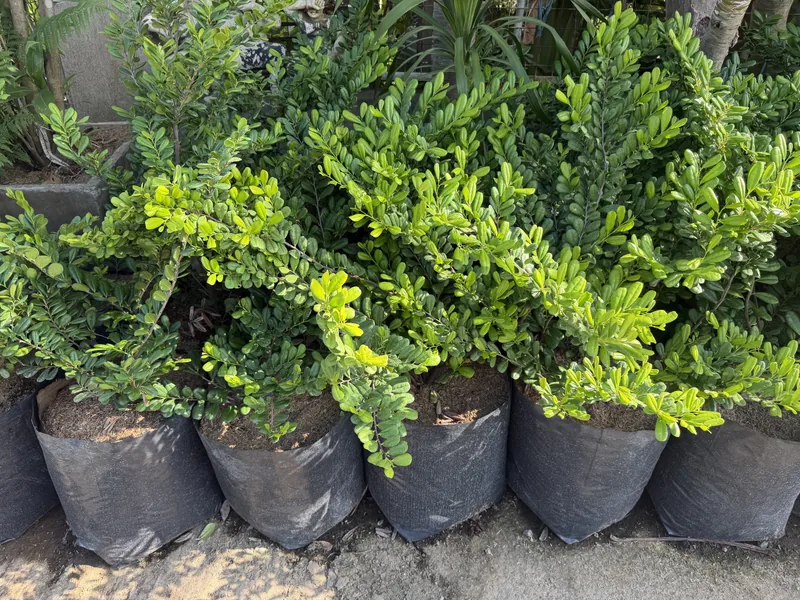
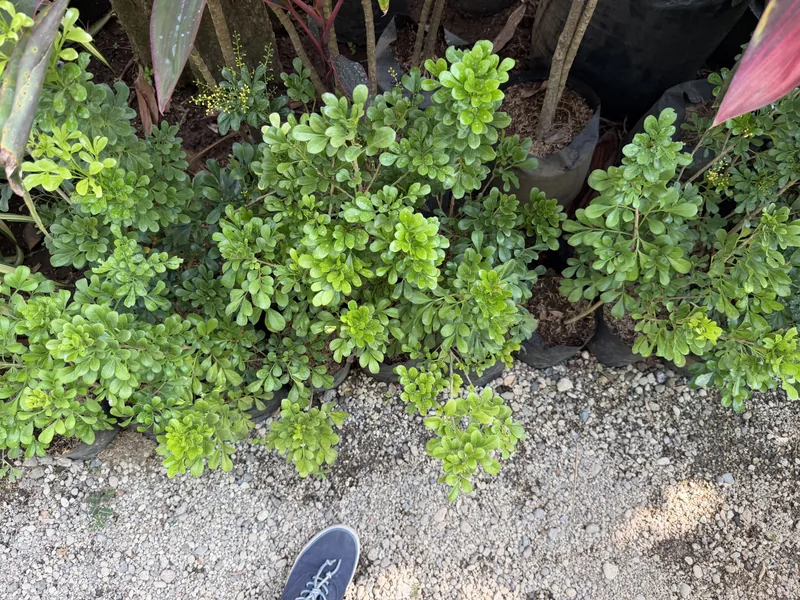
The Chinese Perfume Plant. Glossy compound foliage and tiny rice-grain yellow flowers that scent the air with a sweet, lemony-floral fragrance. Sourced as 1 ft saplings for hedging, foundation plantings, and fragrance gardens.
Pricing Guide (per plant)
| Size / Spec | Price (PHP) |
|---|---|
| 1 ft | ₱80 |
Volume Discounts
- 50–200 plants:5%
- 201–500 plants:8-10%
- 501+ plants:Project-specific pricing
Prices reflect plant only. Delivery, planting, and establishment service quoted per project. Bulk discounts apply on hedge orders. Cinamomo is slow-growing; closer plant spacing accelerates hedge fill-in.
Request Project Quote →About Cinamomo
Cinamomo (Aglaia odorata), the Chinese Perfume Plant, is a small evergreen shrub or compact tree in the Meliaceae family. Native to mainland Southeast Asia and southern China,[^1] it is widely cultivated across the Philippines as an ornamental for its tiny intensely fragrant yellow flowers. The same dried flowers have a documented history scenting Chinese teas and perfumes.[^2] In landscape projects it is specified for fragrance, dense glossy foliage, and a manageable hedge habit.
Common Applications
- Foundation and entryway plantings. Massed near doorways, walkways, and windows where the rice-flower fragrance reaches into living spaces.
- Low to mid-height fragrant hedges. Planted at 45-60 cm centers to form a dense hedge with the bonus of seasonal scent.
- Container and lanai specimens. Pot-grown for balconies, lanai, and parking-area perimeters of condominiums and townhouses.
- Fragrance and sensory gardens. Anchor planting in scent-themed garden beds, paired with sampaguita, ylang-ylang, and dama de noche for layered evening fragrance.
- Resort and hotel arrival landscapes. Near entrances and porte-cochere zones where guests pass closely and notice the fragrance.
Where You'll See It
- Residential entries and walkways across Metro Manila and CALABARZON
- Resort and boutique hotel entry plantings
- Condominium courtyards and amenity-deck containers
- Subdivision common-area fragrance plantings
- Filipino-Chinese household gardens where the plant has long-standing tradition
Why Architects Choose It
- Tiny fragrant flowers carry sweet rice-flower scent that no large-flowering tropical can match
- Compact 2-7 m mature size keeps it in scale with residential courtyards
- Glossy compound leaves give a clean year-round look between bloom flushes
- Slow growth means hedges hold their line with minimal trimming
- Long horticultural history in the region — broadly familiar to Filipino homeowners
Project Types Best Suited
- Residential entry and courtyard gardens
- Hotel and resort arrival plantings
- Condominium amenity decks
- Subdivision common-area fragrance plantings
- Container plantings for balconies and lanai
Specifications
- Botanical name
- Aglaia odorata Lour.
- Family
- Meliaceae
- Native range
- Cambodia, S China, Hainan, Laos, Malaya, Myanmar, Thailand, Vietnam
- Status in PH
- Introduced, widely cultivated as ornamental
- Habit
- Evergreen shrub or small tree, densely branched
- Sourced size
- 1 ft sapling
- Mature height
- 2-7 m typical
- Leaves
- Pinnate compound, 5 obovate to oblong glossy leaflets, 5-12 cm long
- Flowers
- Tiny (~3 mm) yellow, on axillary panicles, intensely fragrant in warm humid conditions
- Fruit
- Ovoid red drupe ~10-12 mm; not consumed
- Growth rate
- Slow
- Sun
- Full sun to light shade
- Water
- Moderate; consistent moisture preferred
- Soil
- Well-drained tropical soils; adaptable
- Pool safe
- Yes (small leaves and small fruit, minimal litter)
- Pet safe
- Treat as caution; not on ASPCA non-toxic list. Plant contains rocaglamides (bioactive compounds).
Cinamomo (Aglaia odorata) Supplier
Cinamomo, more precisely Sinamomong-sungsong in Tagalog botanical references,1 is the Philippine name for Aglaia odorata, the Chinese Perfume Plant. The species is a small evergreen shrub or compact tree in the Meliaceae family with tiny yellow flowers carrying an intensely sweet, rice-grain fragrance — the same flowers that have been used for centuries to scent Chinese teas and traditional perfumery.2
Identity and Names
The plant is a member of the same botanical family as the local narra (Pterocarpus) — Meliaceae includes many tropical hardwoods and ornamentals. Filipino-Chinese households have grown it for generations under the names Cinamomo and Sinamomong-sungsong.1 In English horticulture it is called Chinese Perfume Plant, Chinese Rice Flower, and Mock Lemon.
Native Range
Per Plants of the World Online (Royal Botanic Gardens, Kew), Aglaia odorata is native to Cambodia, southern China, Hainan, Laos, Malaya, Myanmar, Thailand, and Vietnam, growing naturally in the wet tropical biome.3 In the Philippines it is introduced and cultivated, with no recorded wild populations.
Form and Foliage
Cinamomo grows as a multi-branched evergreen shrub or compact tree, typically 2-7 m at maturity.1 Pinnate compound leaves carry five glossy obovate-to-oblong leaflets, 5-12 cm long, with a slightly winged rachis.1 The leaf is the year-round visual character — clean, mid-green, and dense — between flushes of bloom.
Flowers and Fragrance
The signature feature is the flower: tiny golden-yellow blossoms, about 3 mm across, in axillary panicles. Individual flowers are nearly imperceptible at distance; the impact comes from the scent, which Stuart Quimbo’s Philippine medicinal-plants compendium describes as “intensely fragrant during warm, sunny, or humid conditions.”1 The character of the fragrance is sweet, lemony, and rice-like — the basis for the English name “Chinese Rice Flower.”
Plants flower in flushes through warm humid weather, with multiple cycles per year in Philippine lowland climates.
Beyond Ornament: Tea and Perfumery
The dried flowers of Aglaia odorata have a documented history in Chinese tea-scenting and traditional perfumery.1 2 Modern research has identified rocaglamide-class compounds in the plant with antiviral, antimicrobial, anti-inflammatory, and insecticidal activity in laboratory studies; the species is of ongoing biomedical interest.1
Landscape Use in the Philippines
Common deployments:
- Foundation and entryway plantings within reach of doorways, walkways, windows
- Fragrant hedges at 45-60 cm centers, kept low through annual shaping
- Container and lanai specimens for condominium balconies and townhouse perimeters
- Fragrance and sensory garden beds paired with sampaguita, ylang-ylang, dama de noche
- Hotel and resort arrival plantings near guest pathways and porte-cochere zones
Why Specify Cinamomo
Fragrance the foliage cannot match. Few common Philippine landscape plants offer this scent profile. Sampaguita and ylang-ylang are the typical alternatives; cinamomo brings a different character, more rice-like and continuous through warm-weather flushes.
Compact, predictable size. A 2-7 m mature ceiling keeps the plant scaled to residential and amenity-deck contexts.
Slow growth. Once a hedge reaches its target line, slow growth means it stays there with minimal trimming.
Glossy clean foliage. Compound green leaves give a refined year-round look, even between bloom cycles.
Care Notes
- Sun: full sun to light shade; full sun produces strongest bloom
- Water: consistent moisture during establishment; moderate thereafter
- Soil: well-drained, adaptable tropical soils
- Pruning: light shaping after bloom flushes; the plant tolerates regular trim
- Pests: generally trouble-free in landscape contexts; watch for mealybug on stressed plants
Safety Note
Aglaia odorata is not on the ASPCA non-toxic plant list, and laboratory research identifies rocaglamide-class compounds as bioactive. Treat as a caution plant in homes with pets that chew foliage; the historical use of the flowers in tea-scenting does not extend a blanket safety claim to the rest of the plant.
Sources
Footnotes
-
Stuart, Godofredo U. Jr. “Sinamomong-sungsong, Aglaia odorata, Chinese Perfume Plant.” StuartXchange Philippine Medicinal Plants. Accessed 2026. https://www.stuartxchange.org/Sinamomong-sungsong ↩ ↩2 ↩3 ↩4 ↩5 ↩6 ↩7
-
Wikipedia contributors. “Aglaia odorata.” Wikipedia. Accessed 2026. https://en.wikipedia.org/wiki/Aglaia_odorata ↩ ↩2
-
Plants of the World Online (POWO), Royal Botanic Gardens, Kew. “Aglaia odorata Lour.” Accessed 2026. https://powo.science.kew.org/taxon/urn:lsid:ipni.org:names:577227-1 ↩
Sourcing & Supply
Origin
Direct from Luzon foliage and ornamental nurseries that maintain Aglaia odorata stock for the Filipino-Chinese household market and the broader landscape trade. Stock is propagated by cuttings and grown out under partial shade before sale.
Supplier Relationship
Working relationships with multiple growers; bulk hedge orders coordinated across yards when single-source inventory is short.
Quality Control
Plants delivered with full glossy foliage, no leaf yellowing, intact root systems, and a healthy growing tip. Slow-grown stock with even branching is preferred for hedge installations.
Frequently Asked Questions
How much does Cinamomo cost in the Philippines?
Landscape saplings at 1 ft retail at ₱80 per plant. Volume discounts apply on bulk orders starting at 50 plants for hedge installations and project-scale plantings.
Why is Cinamomo grown in Philippine gardens?
For fragrance. Aglaia odorata produces tiny intensely fragrant yellow flowers with a sweet rice-flower scent that perfumes courtyards and entryways. The same dried flowers have a long-standing role scenting Chinese teas and historical perfumery in the region.
How big does Cinamomo grow?
Typically 2-7 meters at maturity, occasionally larger in ideal conditions. Slow growth means it stays scaled to residential courtyards. Plants are easily kept smaller through light annual trimming.
Is Cinamomo native to the Philippines?
No. The species is native to Cambodia, southern China, Hainan, Laos, Myanmar, Thailand, and Vietnam per Plants of the World Online (Royal Botanic Gardens, Kew). It has been cultivated in the Philippines for generations and is naturalized in the cultivated landscape.
Is the same plant called Sinamomo and Sinamomong-sungsong?
Sinamomong-sungsong is the documented Tagalog name for Aglaia odorata in Philippine botanical literature. The plain word 'Sinamomo' is sometimes also used for an unrelated plant (Lawsonia inermis, henna), so the qualified name 'Sinamomong-sungsong' is the more precise reference for this species.
When does Cinamomo bloom?
The plant flowers in flushes during warm humid weather, typical of Philippine wet-season conditions. Established plants in full sun produce multiple flushes per year. The fragrance is most intense on warm afternoons and evenings.
Is Cinamomo safe around pets?
Not listed as non-toxic by ASPCA. The plant contains rocaglamide-class compounds documented in research as bioactive (cytotoxic and insecticidal in laboratory contexts). Treat as a caution plant. Discourage pets from chewing foliage; ingestion may cause mild GI upset.
Can I plant Cinamomo near a pool?
Yes. Small leaves and small fruit produce minimal pool-deck litter. Place at least 1 m back from pool coping for root and trim clearance.