
Cobblestone Pavers
Natural stone cobble quarried in Rizal, in black and white, cut to 4x4, 4x8, and 6x6 inch. Sold in the trade as Java Negra and Java Blanca, though ours comes from neither Java nor Indonesia. Pairs with our authentic Vigan tiles for a cohesive heritage finish.
- Direct from
- Rizal province, Philippines
- Delivery
- Nationwide via partnered freight
- Experience
- Direct quarry relationship, no resale chain
- BIR-registered
- supplier
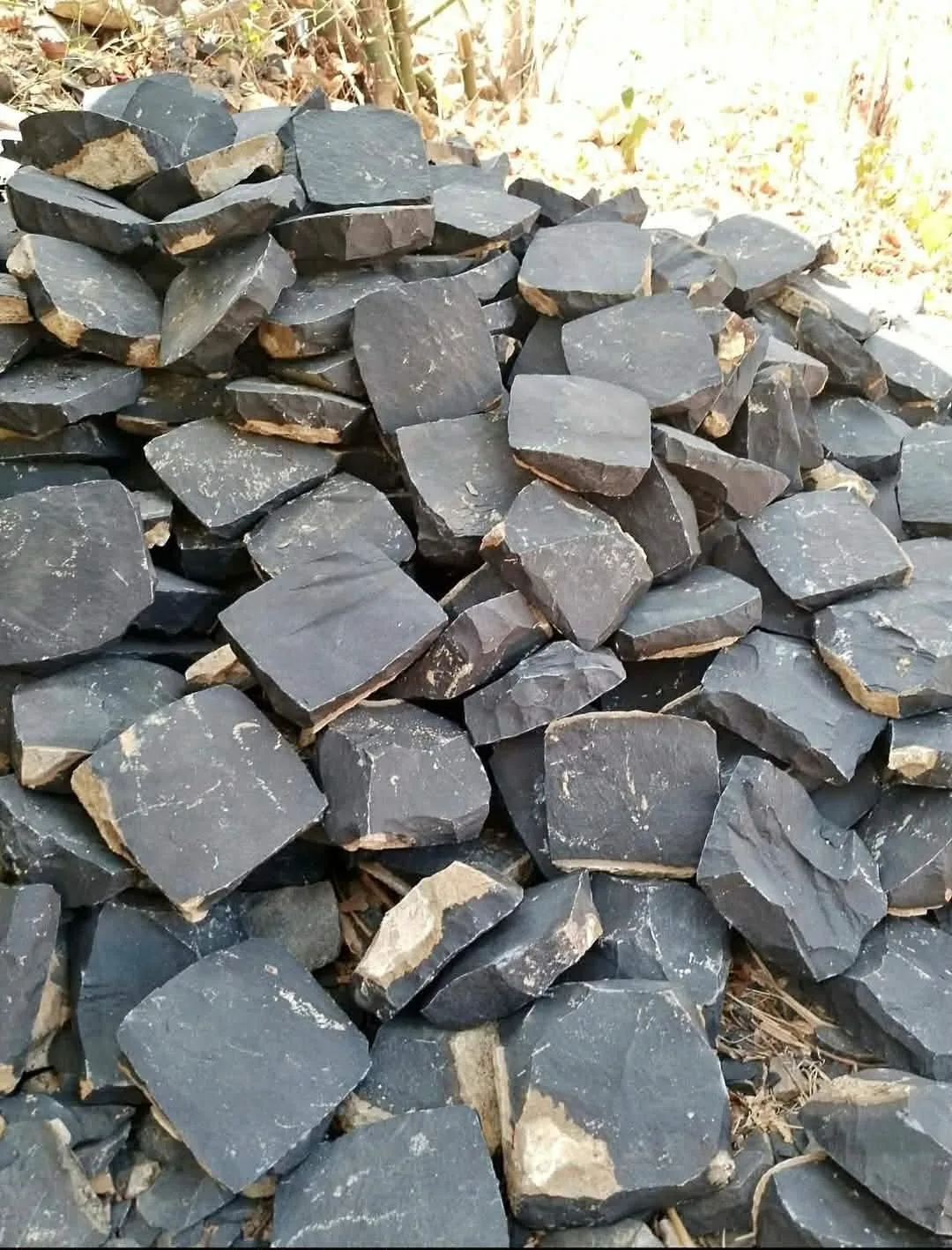
Cobblestone Pavers Price Philippines 2026
- Most ordered Java Negra
4 x 4 inch black
10 x 10 cm
₱13.50 /pc
Small-format black cobble. Densest coverage, best for fine patterns, borders, and detail work
~80 pcs/sqm at a 10 mm joint (68-91 across joint widths). About ₱1,080/sqm
- Java Negra
4 x 8 inch black
10 x 20 cm
₱28 /pc
Rectangular black cobble. Suits running bond and herringbone layouts
~42 pcs/sqm at a 10 mm joint (37-46). About ₱1,176/sqm
- Java Negra
6 x 6 inch black
15 x 15 cm
₱32 /pc
Square black cobble. Cleaner grid, fewer joints per square meter, faster to lay
~38 pcs/sqm at a 10 mm joint (34-41). About ₱1,216/sqm
- Java Blanca
4 x 4 inch white
10 x 10 cm
₱28 /pc
Small-format white cobble. Light, high-contrast paving and border work
~80 pcs/sqm at a 10 mm joint (68-91). About ₱2,240/sqm
Sold in the trade as Java Negra (black) and Java Blanca (white). Ours is quarried in Rizal and reaches you quarry-direct. All prices per piece, VAT-exclusive, before volume discount. Coverage assumes a 10 mm joint. Joint width is a design choice and it moves the piece count by up to 25% between a tight joint and a wide one, so confirm your count against a sample before a large order. Allow 3% for breakage and 10-15% for cuts and wastage, more for fan and arc patterns. Volume discounts apply from 5,000 pieces.
Quantity estimate
How many pieces for your area
~80 pcs/sqm for 4x4 black at a 10 mm joint, plus 3% breakage and 10% cuts and wastage.
Pieces to order
4,521
- Stone cost at list
- ₱61,034
- Per sqm laid
- ₱1,080
- Stone weight
- 3.3 t
- Truck
- 1 × 6-wheeler
Over 5,000 pieces. Volume discounts apply from 5,000 pieces, so ask for your tier.
Estimate only. Prices per piece, VAT-exclusive, before volume discount. Weight is published for the 4x4 black only. Confirm your count against a sample before a large order.
Request a quote for this quantitySpecifications
- Material
- Natural stone, quarried and split. Fine-grained, dense, dark blue-grey to black through the body. Petrographic identification in progress
- Quarried in
- Rizal province, Philippines
- Sizes available
- 4x4, 4x8, and 6x6 inch (10x10, 10x20, 15x15 cm) in black; 4x4 inch in white
- Weight
- 0.735 kg per piece (4x4), about 59 kg/sqm laid
- Color variation
- Natural stone varies in tone and texture between quarry batches
- Finish
- Natural split face, as quarried. Slip resistance not independently tested, dry or wet
- Thickness
- 25 to 40 mm, tapered. Split stone, so each piece is thicker at one edge than the other. The wear face is flat; the underside carries the irregularity. The setting bed takes up the taper and the finished surface is levelled off the top face during laying
- Condition on delivery
- Supplied as quarried. Pieces carry residual clay and soil from the quarry face
- Coverage
- 38 to 80 pcs/sqm at a 10 mm joint depending on size
- Suitability
- Paths, patios, pool decks, and driveways with the correct bedding. See the installation notes for vehicular use
Thickness profile
Most ordered
Our most-ordered size: the 4x4 black
Most projects that come to us start here. Small format, tight pattern, and the lowest per-piece cost of the four cobbles on this page.
- Size
- 4 x 4 inch (10 x 10 cm)
- Weight
- 0.735 kg per piece
- Coverage
- About 80 pcs/sqm at a 10 mm joint
- Cost per sqm
- About ₱1,080 at list
- Material
- Natural stone, quarried and split in Rizal
Where this stone actually comes from
- Trade name
- Java Negra, Java Blanca
- Actual origin
- Rizal province. Not Indonesia.
- Public record
- Basalt and andesite
The cobble we sell as Java Negra and Java Blanca is quarried in Rizal province. Not Indonesia.
We source it direct from Rizal quarries, cut on site, with no resale chain in between. The Indonesian trade name travelled into the local market at some point, probably off an architect's spec sheet, and the yards kept using it because imported-sounding stone sells for more.
The public record lines up. Mines and Geosciences Bureau tenement listings for Region 4A register quarries across Rizal province for basalt and andesite. A published petrography study of Luzon construction aggregates found Rizal material is predominantly basalt and andesite with minor clastic rocks and tuffs.
What that does to your budget
Nothing in the price is paying for a container. No import logistics in your lead time, no exchange-rate exposure, no port clearance. The stone is quarried inside Region 4A and trucked.
If you are comparing our quote against another yard's Java Negra, ask what province it came from. Given what Rizal produces, there is a fair chance you are comparing the same rock from the same province, and the difference is how many hands it passed through.
Ask any supplier two questions
What province, and what rock. If the answer is a trade name instead of a rock name, that tells you how well they know their own product.
Natural stone or moulded concrete
Most cobblestone sold in the Philippines is moulded concrete, textured and pigmented to imitate cobble. Here is how it compares.
Where concrete wins
Where large-format concrete wins is cost per square meter, because a 14 x 28 cm unit covers ground with a quarter of the pieces. If budget is the only constraint and the look is close enough, buy the concrete. We would rather say that than lose the next three projects.
Where stone earns it
Where natural stone earns the difference is color permanence. Pigmented concrete carries its color in a surface layer that chalks under tropical UV, which is why concrete cobble driveways drift toward gray in three to five years. Natural stone has the color running through the body. What weathers is the surface texture.
Weight, load, and freight
Each 4x4 piece averages 0.735 kg. At 80 pieces per square meter that is about 59 kg per square meter of finished paving, stone only, before bedding.
- Laid
- 59 kg/sqm4x4, stone only
- Per tonne
- ~1,360 pcsroughly 17 sqm
- 6-wheeler · 5,000 kg rated
- ~6,800 pcsroughly 85 sqm
- 10-wheeler · 12,000 kg rated
- ~16,000 pcsroughly 200 sqm
For podium and roof deck work: 59 kg/sqm is the stone alone. Add your bedding and setting bed for the dead load figure your structural engineer needs. Send us the slab's allowable superimposed load and we will confirm which size fits inside it.
We publish this because nobody else does and every deck project ends up asking.
Budget by area, not just by piece
We price per piece. Contractors quote by square meter. The number connecting them is pieces per square meter, and it moves with joint width.
At a 10 mm joint the 4x4 runs about 80 pieces per square meter. Tighten to 3 mm and it climbs to about 91. Open it to 20 mm for a rustic, heavily jointed look and it drops to about 68. That is a 25% swing on the same stone over the same area. On a 200 sqm job it is the difference between roughly 13,600 and 18,200 pieces.
Agree the joint width with your contractor before you order, then add 3% for breakage and 10 to 15% for cuts and wastage. Fan and arc patterns need heavy edge cutting and belong at the top of that allowance.
Order a sample first and let your contractor confirm the count against the actual piece.
Selecting size and color
By application
Garden and landscape paths.
Black 4x4 for a fine, tight pattern. 6x6 for a cleaner grid and a faster install. White works here too.
Patios and pool decks.
Any size. A small-format field is heavily jointed: at a 10 mm joint, a square meter of 4x4 carries roughly 16 linear meters of joint. Slip resistance is not tested on this stone, dry or wet, and we have not measured what jointing does for it, so specify the joint width with your contractor and confirm suitability for your application.
Driveways, rotundas, and parking.
Mortar-set on a reinforced base. Confirm thickness with us before you spec it, and read the installation note below. Cobblestone driveways are a common sight in Peninsula de Punta Fuego, where we built a wind-tolerant tropical garden.
Commercial walkways and ramps.
Small formats give the densest jointing. Slip resistance is untested, on the level or on a slope, so confirm suitability for your application before you spec it.
Heritage and resort hardscape.
Black paired with Vigan tiles for Ilocos-street character.
Banding, borders, and insets.
Both colors in 4x4. That size is what makes tight two-tone detail work.
Black
Black anchors modern and minimalist schemes and hides staining.
White
White lifts shaded courtyards and stays cooler in sun, but shows oil and organic staining and costs more than double per square meter in the 4x4.
Send a mood board or reference photo and we will match.
Where you want a larger unit and a cut face rather than a cobble field, see our larger-format cut stone.
One supplier, one delivery
Pairs with authentic Vigan tiles
Cobblestone echoes the cobbled heritage streets of Vigan, and we are one of the few suppliers who can pair it with the real thing: authentic Vigan terracotta tiles and bricks (damili) sourced direct from Ilocos Sur kilns.
For resort, hospitality, and heritage-styled residential work that means a cohesive finish from one supplier. Cobblestone underfoot, genuine Vigan tile and brick on floors and feature walls, one order and one delivery.
See our Vigan Tiles lineInstallation
The method depends on load.
Paths, patios, and pool decks
Compacted aggregate base 4 to 6 inches, a sand or fine-gravel setting bed, stone laid to your agreed joint, joints filled with polymeric sand swept in and wetted. Edge restraint around the perimeter so the field does not spread.
Driveways, rotundas, and vehicle areas
This is not a preference. At our unit thickness the stone works as a facing over a reinforced slab, not as a structural paving layer. Dry-laid or sand-set cobble under vehicle load will rut and spread, and turning areas like rotundas are the worst case because tyres put horizontal shear into the joints. Base design and installation are your contractor's responsibility, and we will confirm thickness and bedding requirements in writing before you order.
Thickness and bedding, both methods.
Set your excavation depth from the thickest point, 40 mm, plus the bed. Each piece is bedded individually and tapped down to line off its top face, which is standard practice for split stone. Both sand and mortar beds take up the taper. What does not work is the fast method: screed the bed, lay the field, run a plate compactor over it. That assumes uniform thickness, and this stone is not uniform. Tell your contractor before they price the labour, because a crew that quotes this as uniform concrete pavers will underbid the work.
Before setting, both methods.
Rinse and dry pieces before setting. Pieces arrive as quarried and carry residual clay and soil from the quarry face, and clay film on the bedding face weakens mortar bond. The same instruction ships in the laying guide with every order.
Patterns.
Running bond, herringbone (best interlock, the usual driveway choice), fan or arc (the most authentic look, the most labor, the most waste), and stack bond.
Cleaning after install.
Contractors reach for muriatic acid to clear mortar haze. Ask us first. A pH-neutral stone cleaner is the safe default on any natural stone you have not confirmed, and acid etching cannot be reversed.
Sealing.
Water absorption has not yet been tested on this stone, so we are not going to tell you it needs sealing. A sealer will deepen the color and ease cleaning if you want that, and the white shows oil and organic staining that a dark stone hides. For pool surrounds use one rated for wet, chlorinated conditions. Avoid acidic cleaners on any natural stone. We will publish absorption figures here once testing is complete.
We include laying, jointing, and cleaning guidelines with every order.
Test data: published and pending
We publish measured figures and mark the rest as pending. An empty spec with a stated reason is worth more to a specifier than a category average presented as this stone's number.
We will not quote a range for natural stone as a category and let it read as this product's figures. Ask us where a test result sits if your specification needs one on a date.
- measured or observed
- 3
- testing in progress
- 7
Documentation
We are BIR-registered. Sales Invoice, Official Receipt, and Delivery Receipt provided standard. COA-compliant documentation, supplier credentials, and material origin statements available on request for institutional projects. PhilGEPS-eligible orders coordinated case-by-case.
| Property | Status |
|---|---|
| Average piece weight | 0.735 kg, measured |
| Thickness | 25 to 40 mm, measured |
| Colour and texture | Fine-grained, dense, dark blue-grey to black through the body, observed on fresh fracture faces |
| Rock type (petrographic ID) | Testing in progress |
| Bulk density | Testing in progress |
| Water absorption | Testing in progress |
| Compressive strength | Testing in progress |
| Modulus of rupture | Testing in progress |
| Abrasion resistance | Testing in progress |
| Slip resistance, dry and wet | Testing in progress |
How to Order
- 01
Inquiry to Quote
Send us your specs and project size. We respond with a project-specific quote within 24 hours.
- 02
Site Visit / Spec Confirmation
For larger projects, we coordinate a site visit or spec call to confirm requirements.
- 03
Order Confirmation + Deposit
50% deposit confirms your order. Established institutional accounts may qualify for net terms.
- 04
Production / Sourcing & Delivery
We coordinate sourcing, production, and delivery. Final payment due on delivery.
- Response time
- We respond within 4 business hours.
- Payment terms
- 50/50 standard. Net terms available for established institutional accounts.
- Documentation
- Sales Invoice, Delivery Receipt, COA-compliant documentation on request.
Procurement FAQ
What is the price of cobblestone pavers in the Philippines?
Quarry-direct, per piece by size and color. Black is ₱13.50 for 4x4 inch, ₱28 for 4x8, and ₱32 for 6x6. White is ₱28 for 4x4. Coverage runs 38 to 80 pieces per square meter at a 10 mm joint depending on size, so budget by area as well as by piece. Moulded concrete cobble from hardware retailers runs ₱18-20 per piece, landing between ₱450 and ₱1,200 per square meter depending on unit size. Volume discounts apply from 5,000 pieces.
Is Java Negra imported from Indonesia?
Ours is not. Java Negra and Java Blanca are trade names that travelled into the local market. The stone we sell under those names is quarried in Rizal province, and we source it direct from Rizal quarries. Mines and Geosciences Bureau tenement records register quarries across the province for basalt and andesite, and published petrography of Luzon construction aggregates confirms Rizal material is predominantly basalt and andesite. We cannot speak for what every other yard sources, so ask yours what province and what rock. If your spec specifically requires imported Indonesian stone, tell us and we will quote that separately.
Are these natural stone or concrete?
Natural stone, quarried and split. Most cobblestone paver products in the local market are moulded, pigmented concrete made to imitate cobble. With natural stone the color goes through the body rather than sitting in a surface layer, so the face will not fade to gray the way pigmented concrete does. It also means natural variation in tone and texture between pieces and between quarry batches, which is a property of the material rather than a defect.
What size is the 4x4 in metric?
10 x 10 cm. Buyers and drawings often work in metric while the yards quote in inches, so the two names refer to the same piece. Our 4x8 is 10 x 20 cm and our 6x6 is 15 x 15 cm.
How much does it weigh per square meter?
About 59 kg per square meter in the 4x4, stone only. Each piece averages 0.735 kg with roughly 80 to a square meter at a 10 mm joint, which works out to about 17 sqm per tonne. For podium or roof deck installations, add your bedding and setting bed to get the dead load figure. Send us your slab's allowable superimposed load and we will confirm which size fits.
How many pieces do I need per square meter?
It depends on your joint width, which is a design decision rather than a property of the stone. At a 10 mm joint: 4x4 is about 80 pcs/sqm, 4x8 about 42, and 6x6 about 38. Tighten to 3 mm and the 4x4 climbs to about 91. Open it to 20 mm and it drops to about 68. That is a 25% swing, so agree the joint width with your contractor before ordering, then add 3% for breakage and 10-15% for cuts and wastage.
Can I use cobblestone pavers for a driveway or rotunda?
Yes, with the right base. Cobble needs mortar-set installation on a reinforced base to carry repeated vehicle load, and at our thickness the stone functions as a facing over that base rather than as the structural layer itself. Rotundas and turning areas are the hardest case, because turning tyres put horizontal shear into the joints. Laying it straight onto a sand bed the way you would for a garden path is the most common and most expensive mistake we see. Tell us it is vehicular when you inquire and we will confirm thickness and base specification in writing before you order.
Is natural stone more expensive than concrete cobble?
Depends on the format. Large-format concrete units are cheaper per square meter than anything we sell, because they cover ground with fewer pieces. If your budget is fixed and the look is close enough, large-format concrete is the honest answer. Natural stone earns the difference over time, since concrete pigment chalks under tropical UV and stone color does not.
What is the difference between the black and the white?
Color and price. Black comes in 4x4, 4x8, and 6x6 inch. White is currently 4x4 only. Black 4x4 is ₱13.50 per piece against ₱28 for white, roughly ₱1,080 per square meter versus ₱2,240 at a typical joint. Worth knowing before you spec a large area in white. Both are sold in the trade as Java Negra and Java Blanca, though neither comes from Java.
How should it be cleaned?
Use a pH-neutral stone cleaner. Ask us before anyone applies muriatic acid, which is the reflex for clearing mortar haze after install. Acid etching on natural stone cannot be reversed and shows worst on a two-tone banded field.
Do they need sealing?
Water absorption has not yet been tested on this stone, so we are not going to tell you it needs sealing. A sealer will deepen the color and ease cleaning if you want that, and the white shows staining a dark stone hides. For pool surrounds use one rated for wet, chlorinated conditions. Avoid acidic cleaners on any natural stone. We will publish absorption figures here once testing is complete.
Do you supply Vigan tiles to match?
Yes, and this is the pairing worth knowing about. We source authentic Vigan terracotta tiles and bricks (damili) direct from Ilocos Sur kilns. Cobblestone paving underfoot with genuine Vigan tile and brick on floors and feature walls gives resort, hospitality, and heritage-styled residential projects a cohesive finish from a single supplier and a single delivery. See our Vigan Tiles line.
What is the minimum order?
Project-volume orders get the best per-piece pricing, with discounts applying from 5,000 pieces. Smaller orders are accepted, with per-piece pricing reflecting the smaller volume. Send your square meterage and we will confirm the minimum and the volume tier for your project.
What is the typical lead time?
Stock sizes and colors run a few days from order. Larger volume orders, or a color currently between batches, run up to about a week. Send your target start date and we will confirm availability against your schedule.
Can I see samples before ordering?
Yes. We can ship a sample set to your project address so you can confirm tone, texture, and the actual piece dimension before you commit to a project quantity. For natural stone this is worth doing, since tone varies between batches and a sample also lets your contractor verify the piece count against your intended joint width.
Do you provide installation services?
We supply stone. Installation can be coordinated through our partnered installers, or your own contractor can lay it with our guide. For larger projects we can recommend crews experienced with cobble-pattern paving, particularly fan and herringbone layouts, which are slower to set and less forgiving than running bond.
Do you provide documentation?
Yes. Standard orders receive Sales Invoice, Official Receipt, and Delivery Receipt. For institutional projects we provide COA-compliant documentation and material origin statements on request. PhilGEPS-eligible orders coordinated case-by-case.
Request Project Quote
For procurement officers, architects, and developers. We respond within 4 business hours.
Quick Facts
- Origin
- Rizal province, Philippines
- Typical Lead Time
- Stock sizes: a few days from order. Larger volume, or a color currently between batches: up to about a week.
- Minimum Order
- Project-specific, best pricing from 5,000 pieces
- Delivery
- Nationwide via partnered freight
- Category
- Natural Stone
Related Materials
Ready to spec your project?
Send us your project details. We respond within 4 business hours.