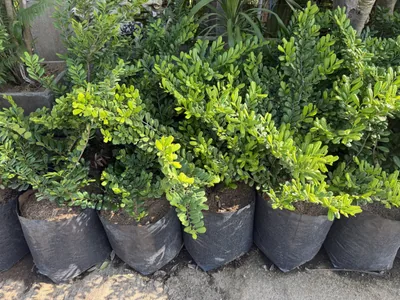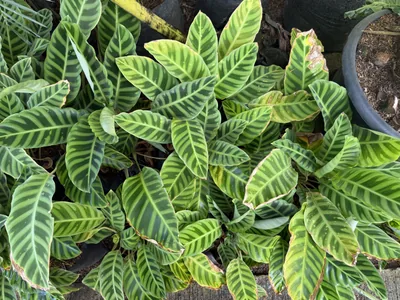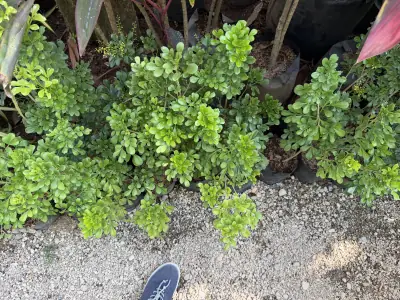
Croton
Codiaeum variegatum
Also known as: San Francisco, Sagilala, Garden Croton, Variegated Croton, Joseph's Coat
Locally called San Francisco. Native Philippine landscape shrub with the broadest foliage color range of any common landscape plant. Petra, Gold Dust, Mammy, Norma, Banana and other cultivars at uniform per-plant pricing for color-block specification flexibility.
Pricing Guide (per plant)
| Size / Spec | Price (PHP) |
|---|---|
| 1.5-2 ft (any cultivar) | ₱85 |
Volume Discounts
- 50–200 plants:5%
- 201–500 plants:8-10%
- 501+ plants:Project-specific pricing
Uniform ₱85 per plant across cultivars enables color-block specification without per-cultivar premium pricing. Common cultivars (Petra, Gold Dust, Mammy) move at this rate; rare or specialty cultivars (Picasso's Paintbrush, Magnificent, certain Mrs. Iceton selections) may run higher and are quoted on request. Bulk hedge pricing applies at 50+ plants. Delivery and planting quoted separately.
Request Project Quote →About Croton
Codiaeum variegatum, locally called Croton or San Francisco, is a native Philippine evergreen shrub in the Euphorbiaceae family with the broadest foliage color range of any commonly available landscape plant.[^4] Per Plants of the World Online (Royal Botanic Gardens, Kew), the species is native to Malesia and the SW Pacific including the Philippines.[^1] Hundreds of named cultivars produce leaves in red, orange, yellow, pink, bronze, purple, green, and multicolored variegation. The plant is widely specified for hedges, mass plantings, color blocks, container accents, and traditional cemetery and memorial plantings. It is toxic: NC State Extension records diterpene esters in every part of the plant, causing vomiting and diarrhoea if eaten and allergic dermatitis from the milky sap, at a poison severity rated low. Placement caution is required in residential gardens with cats, dogs, or small children.
Common Applications
- Color hedges and screening. Planted at 30-45 cm centers for 4-6 ft hedges. Petra and Mrs. Iceton are the standard hedging cultivars; both grow uniformly and take pruning well.
- Mass plantings and color blocks. Single-cultivar drifts produce clean color blocks at distance, suitable for project frontages, signage beds, and resort grounds. Mixed-cultivar plantings produce carnival-style mosaics.
- Foundation and entry plantings. Massed around houses, walls, and entry zones for permanent color without flowering cycles.
- Container and patio accents. Pot-grown for balconies, pool decks, and lobby planters; tolerates pot culture well.
- Roadside and median strips. Used widely in PH municipal landscaping for low-maintenance year-round color.
- Cemetery and memorial plantings. Long-standing PH cultural use; the colorful permanent foliage stays vivid year-round without flower cycles to manage.
- Formal parterre planting. Single-cultivar geometric beds work as living color in formal garden designs.
Where You'll See It
- Subdivision common areas across Metro Manila, CALABARZON, and Cebu
- Resort grounds and hospitality property landscapes
- Roadside median strips and project frontages
- Filipino-Chinese gardens and traditional residential plantings
- Cemetery and memorial gardens nationwide
- Residential foundation plantings and entry hedges
Why Architects Choose It
- PH-native species (per POWO), biodiversity-friendly specification with no invasive-plant risk
- Broadest foliage color range of any common PH landscape shrub
- Uniform pricing across cultivars, so color-block specification comes without per-cultivar premium
- Permanent color without flowering cycles, so lower maintenance than seasonal bloomers
- Affordable at hedge scale; easy to specify in volume
- Long cultural history in PH gardens
Project Types Best Suited
- Subdivision common-area landscaping
- Resort and hospitality grounds
- Cemetery and memorial gardens
- Residential foundation and entry plantings
- Municipal roadside and median plantings
- Container and patio installations
Specifications
- Botanical name
- Codiaeum variegatum (L.) Rumph. ex A.Juss.
- Family
- Euphorbiaceae
- Order
- Malpighiales
- Genus
- Codiaeum
- Native range
- Philippines, Indonesia, Malaysia, New Guinea, Pacific Islands (Bismarck Archipelago, Fiji, Maluku, Lesser Sunda, Queensland)
- Status in PH
- Native species (per POWO)
- Habit
- Evergreen tropical shrub or small tree
- Sourced size
- 1.5-2 ft (landscape stock)
- Mature height
- 1.8-3 m typical; landscape specimens commonly held at 4-6 ft
- Leaves
- Alternate, simple, leathery, glossy, 5-30 cm long; shapes from linear/lanceolate to ovate, oak-shaped, twisted (spiral), violin-shaped, or ribbon-like
- Color range
- Yellow, orange, red, pink, bronze, purple, green; variegated with stripes, blotches, dots, or vein-coloring
- Flowers
- Insignificant; small white male and yellowish female flowers
- Latex sap
- Milky caustic latex bleeds when cut (typical of Euphorbiaceae)
- Growth rate
- Moderate
- Sun
- Full sun for best color; partial shade is tolerated but washes color toward green
- Water
- Moderate; consistent moisture during establishment and warm season
- Soil
- Well-drained, humus-rich; adaptable to most PH soils
- Drought tolerance
- Low to moderate; wet tropical biome species
- Hardiness
- USDA 11a-12b; PH lowlands are well within range
- Pet safe
- No. Toxic per NC State Extension: diterpene esters, poison severity rated low, causing nausea, vomiting and diarrhoea if eaten, plus allergic dermatitis from repeated sap contact. Note the ASPCA has no entry for Codiaeum variegatum either way, so the authority here is NC State, not the ASPCA. Keep out of pet-accessible and children's-reach areas.
- Pool safe
- Yes for placement; no significant litter and non-aggressive root system. Avoid pet/child reach due to toxicity.
Croton (Codiaeum variegatum / San Francisco) Supplier
Codiaeum variegatum, called San Francisco in PH trade, is the most colorful native Philippine landscape shrub and the default specification for permanent foliage color across PH residential, commercial, and municipal landscapes. Per Plants of the World Online (Royal Botanic Gardens, Kew), the species is native across Malesia and the SW Pacific including the Philippines, Indonesia, Malaysia, New Guinea, and Pacific islands such as Fiji and Queensland.1
See Croton in our tropical garden design guide.
Identity and Names
In PH trade the dominant name is San Francisco, with regional variants including Sagilala.2 In international horticulture the plant is Garden Croton, Variegated Croton, or Joseph’s Coat. The “San Francisco” naming origin is unclear, but the term is universal across PH nursery and landscape trade. We supply under both names interchangeably.
Native Range
The species is native to Malesia to the SW Pacific including the Philippines.1 This makes Croton one of the more strongly PH-cultural-rooted ornamental shrubs in commercial trade: long horticultural history, native ecological status, broad cultivar diversity developed over centuries of selection.
Cultivar Range
Hundreds of named cultivars exist; the standard PH rotation includes:
- Petra: broad leaves with red, orange, yellow, and green veining. The most common hedging cultivar.
- Gold Dust: green leaves with bright yellow speckles. Compact form, good for borders.
- Mammy: twisted curled leaves in red, orange, and green. Vertical character.
- Norma: red and yellow veining on a dark green base.
- Banana: long narrow yellow-blade leaves.
- Mrs. Iceton: leaves shift from green to yellow to red as they mature.
- Sunny Star: bright yellow-green leaves, compact, good for mass.
- Zanzibar: narrow grass-like leaves in red, orange, green. Distinct texture.
Specialty cultivars (Picasso’s Paintbrush, Magnificent, Spirale, Andreanum, Eleanor Roosevelt) sourced on request.
Uniform Pricing for Color-Block Specification
The ₱85-per-plant flat rate across standard cultivars is deliberate: it lets specifiers mix and match cultivars in single-color blocks or multi-color mosaics without budget impact. A 50-plant Petra hedge and a 50-plant mixed-cultivar drift price the same.
This is rare in landscape supply, because most colored or variegated cultivars across plant categories command per-cultivar premium pricing. The flat rate works because Crotons propagate cheaply from stem cuttings, and grower throughput across cultivars is similar.
Toxicity Warning
Croton is toxic, and the sap is an irritant. It is a Euphorbiaceae, the spurge family, and it bleeds a milky latex when cut. NC State Extension records the toxic principle as diterpene esters, with the whole plant (bark, leaves, roots, sap, seeds, stems) listed as poisonous:3
- Ingestion: nausea, vomiting, and diarrhoea. Toxic mainly if eaten in quantity.
- Skin contact: the milky latex causes allergic dermatitis with repeated exposure.
- Overall poison severity: rated low by NC State. Real, but not an emergency-room plant.
One correction worth making, because this page used to get it wrong. Croton is widely described online as “ASPCA-listed toxic to cats, dogs, and horses.” The ASPCA has no entry for Codiaeum variegatum at all, in either its toxic or its non-toxic list. We checked the list directly. The toxicity is genuine and documented, but the ASPCA is not the source for it, and we would rather name the right authority than borrow a more official-sounding one.
Worth knowing if you go looking: the ASPCA does list “Joseph’s Coat”, and it comes back non-toxic. That entry is Iresine herbstii, a completely different plant in a different family. “Joseph’s Coat” is also a trade name for croton, so searching that name will hand you a clean bill of health for the wrong plant.
Practical placement guidance:
- Avoid pet-accessible and children’s-reach zones in residential gardens
- Wear gloves when pruning; latex sap irritates sensitive skin
- For commercial and institutional landscapes, the toxicity is rarely a placement constraint, but staff should be informed
- Pool-deck placement is fine for adult-use pools; reconsider for family pools where pets or children may interact with foliage
Cultural Use in the Philippines
Croton has long-standing PH cultural use in cemetery and memorial plantings because the colorful permanent foliage stays vivid year-round without flower cycles to manage.2 The plant is also a fixture in:
- Filipino-Chinese family gardens
- Traditional residential foundation plantings
- Municipal roadside and median plantings
- Resort and hospitality grounds across the country
Landscape Use
Common deployments:
- Color hedges and screening at 30-45 cm spacing
- Mass plantings and color blocks for project frontages, signage beds, resort grounds
- Foundation and entry plantings around houses and walls
- Container and patio accents on balconies, pool decks, and lobby planters
- Roadside and median strips in municipal landscaping
- Cemetery and memorial plantings in PH cultural tradition
- Formal parterre planting with single-cultivar geometric beds
Why Specify Croton (San Francisco)
Native PH species. Native status per POWO supports biodiversity-led briefs without invasive-plant risk.
Broadest foliage color range. No other commonly available PH landscape shrub matches the cultivar diversity.
Uniform pricing across cultivars. Specifiers can mix Petra, Gold Dust, and Mammy in the same bed without budget impact.
Permanent color without flowering cycles. Lower maintenance than seasonal bloomers.
Affordable at hedge scale. ₱85 per plant makes 50-200 plant orders practical for residential and commercial budgets.
Long PH cultural history. Familiar to homeowners, landscape contractors, and municipal grounds-maintenance teams nationwide.
Care Highlights
- Sun: full sun essential for color; shade washes leaves toward green
- Water: moderate; consistent during establishment, then drought-tolerant
- Soil: well-drained, humus-rich; adaptable
- Pruning: annual shaping; remove all-green reverted branches to maintain color
- Pests: spider mites, mealybugs, scale; treat early with insecticidal soap or neem oil
Sources
Footnotes
-
Plants of the World Online (POWO), Royal Botanic Gardens, Kew. “Codiaeum variegatum (L.) Rumph. ex A.Juss.” Accessed 2026. https://powo.science.kew.org/taxon/urn:lsid:ipni.org:names:85073-3 ↩ ↩2
-
Stuart, Godofredo U. Jr. “Sagilala, Codiaeum variegatum.” StuartXchange Philippine Medicinal Plants. Accessed 2026. https://www.stuartxchange.org/Sagilala.html ↩ ↩2
-
NC State Extension Plant Toolbox. “Codiaeum variegatum.” North Carolina State University. Accessed 2026. https://plants.ces.ncsu.edu/plants/codiaeum-variegatum/ ↩
We plant and install this
Halamanan supplies and installs Croton as part of our landscape design and landscape construction projects. We source the plants, place them in the design, and plant them with the rest of the garden.
Sourcing & Supply
Origin
Sourced from established Luzon nursery growers producing Croton at 1.5-2 ft landscape stock across the standard cultivar range: Petra, Gold Dust, Mammy, Norma, Banana, and others. Plants are propagated by stem cuttings and grown out in full sun for optimal color development before sale.
Supplier Relationship
Working relationships with multiple growers; bulk hedge orders coordinated across yards. Specialty cultivars (Picasso's Paintbrush, certain Mrs. Iceton selections) sourced on request through grower network.
Quality Control
Plants delivered with full coloration developed in nursery sun, no leaf yellowing from shade or stress, intact root systems, and clean foliage. Stock is screened for spider mite, scale, and mealybug damage before delivery.
Frequently Asked Questions
How much does Croton cost in the Philippines?
Standard cultivars at 1.5-2 ft retail at ₱85 per plant, uniform pricing across cultivars including Petra, Gold Dust, Mammy, Norma, and Banana. Specialty or rare cultivars (Picasso's Paintbrush, certain Magnificent or Mrs. Iceton selections) may run higher. Volume discounts apply on bulk hedge orders starting at 50 plants.
Why is Croton called San Francisco in the Philippines?
San Francisco is the most common Tagalog/trade name for Codiaeum variegatum in PH, with regional variants including Sagilala. The naming origin is unclear but the term is universal across PH nursery trade. The plant is also called Garden Croton, Variegated Croton, and Joseph's Coat in international horticulture.
Is Croton safe for pets?
No. Croton is a Euphorbiaceae with an irritant milky latex. NC State Extension records the toxic principle as diterpene esters, with nausea, vomiting and diarrhoea if eaten and allergic dermatitis after repeated sap contact, and rates the overall poison severity as low. One honest correction worth making: the ASPCA does not list Codiaeum variegatum at all, in either its toxic or its non-toxic list, so anyone citing an 'ASPCA croton listing' is citing something that does not exist. The toxicity is real and documented; the ASPCA is simply not the source for it. Wear gloves when pruning, and keep it out of pet-accessible and children's-reach zones.
Why are my Croton leaves losing color?
Insufficient light. Crotons need full sun or very bright filtered light to develop their full color range. In deep shade, leaves revert toward mostly green. Move to a sunnier position and color saturation typically returns within 4-8 weeks of new growth flush.
Is Croton native to the Philippines?
Yes. Per Plants of the World Online (Royal Botanic Gardens, Kew), the native range of Codiaeum variegatum includes the Philippines alongside Indonesia, Malaysia, New Guinea, and Pacific islands such as Fiji and Queensland. This is one of the more colorful PH-native landscape shrubs.
Which Croton variety is best for a hedge?
Petra is the most reliable hedging cultivar, with broad leaves in green, yellow, orange, and red veining. Mrs. Iceton works well for hedges that shift color as leaves mature. For dwarf-scale hedges and accent rows, Mammy and Gold Dust hold up. At 30-45 cm spacing, expect a 4-6 ft hedge in 2-3 growing seasons.
What cultivars do you stock?
Standard rotation includes Petra (most common), Gold Dust, Mammy, Norma, Banana, Mrs. Iceton, and Sunny Star. Specialty cultivars including Picasso's Paintbrush, Magnificent, Spirale (twisted leaf), Andreanum, and selected Eleanor Roosevelt forms can be sourced on request through the grower network. Pricing is uniform at ₱85 across the standard cultivars; specialty cultivars are quoted separately.
Do Crotons need full sun?
Yes for full color expression. The species develops its dramatic color range only with strong light. Partial shade is tolerated but produces leaves with washed-out color shifting toward green. For the cultivars sold for color (which is most of them), site in full sun to maximize the foliage display.
How fast does Croton grow?
Moderate. From a 1.5-2 ft starter, expect 1-2 ft of growth per year in PH lowland conditions with full sun. Mature shrubs reach 4-6 ft within 2-3 growing seasons and form dense color hedges at standard 30-45 cm spacing.
Is Croton pool safe?
Yes for placement. Crotons drop minimal leaf litter, no fruit issue, non-aggressive roots. The pool-safety constraint is toxicity, not horticulture. Avoid placement at children's or pets' reach near pool decks. The milky sap can also irritate sensitive skin if rubbed during pruning.