Date Palm
Phoenix dactylifera
Also known as: True Date Palm, Datiles, Phoenix dactylifera
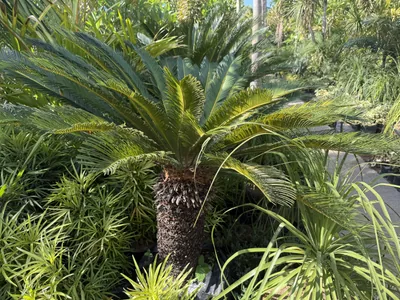
The prestige palm of Philippine landscaping. A thick, diamond-patterned trunk and arching blue-green fronds that read Mediterranean or grand-resort from across a car park. Slow-growing, drought-tolerant, salt-tolerant, and expensive for exactly one reason: a 12 ft trunk is 15 to 20 years of someone else's patience. It will not fruit here, and we would rather tell you that up front. ₱5,000 to ₱40,000 by trunk height.
Pricing Guide (per palm)
| Size / Spec | Price (PHP) |
|---|---|
| Young (4-6 ft) | ₱5,000–₱10,000 |
| Developing (8-10 ft) | ₱15,000–₱30,000 |
| Semi-mature (12-16 ft) | ₱30,000–₱40,000 |
Volume Discounts
- 5+ palms:Volume pricing on avenue and entrance runs, quoted per project
Plant material only. Pricing is driven by trunk height and caliper, which is another way of saying it is driven by time: Date Palm gains only 6-12 inches of trunk a year, so a 12 ft trunk represents 15 to 20 years of cultivation and cannot be produced to order. Larger field-grown palms need crane installation, which is a real line item, not a rounding error. Supply at the top of the range varies with availability. True date-fruiting specimens are rare and priced separately from ornamental stock.
Request Project Quote →About Date Palm
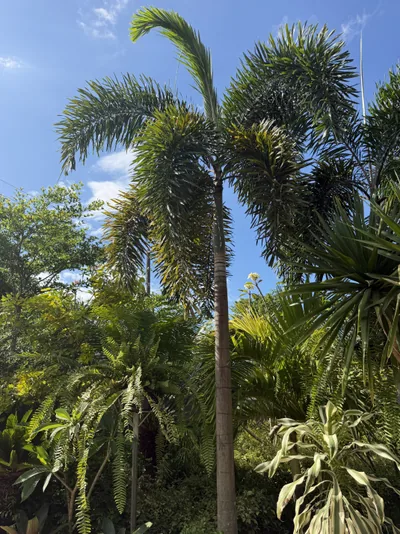
The Date Palm is the prestige palm of Philippine landscaping. A thick, textured, diamond-patterned trunk and a full crown of arching blue-green fronds create an instant Mediterranean or grand-resort atmosphere, and large specimens command some of the highest prices in the local plant market. Developers use them at grand entrances, driveways, and clubhouse arrivals for exactly that reason. Two things worth being straight about. First, it will not fruit here: Phoenix dactylifera needs hot, dry conditions to set commercial-quality dates, and Philippine humidity prevents proper ripening, so you are buying architecture, not agriculture. Second, the lower fronds carry sharp spines at the base, which is a genuine siting constraint near footpaths, play areas, and pool decks. It is drought-tolerant, salt-tolerant, extremely long-lived, and slow, and the slowness is what you are paying for.
Common Applications
- Grand entrance and driveway specimen. The signature use. A row of mature Date Palms at an arrival is the most direct way to say premium in a PH landscape.
- Resort and hotel focal point. Clubhouse arrivals and hotel forecourts, where the palm has to read from a distance.
- Pool-area statement planting. Set well back from the deck: the canopy spreads to about 20 ft and the lower fronds are spined.
- Mediterranean and arid-themed gardens. Pairs with gravel, stone, and succulents where a soft tropical palm would read wrong.
- Avenue planting for upscale developments. Planted at 5-6 m centres for a formal avenue.
- Beachfront and coastal properties. Genuinely salt-tolerant, which is why it survives frontline positions that kill softer palms.
Where You'll See It
- Grand entrances and driveways in premium developments
- Resort and hotel forecourts and clubhouse arrivals
- Pool and amenity areas, set back from the deck
- Mediterranean-themed and arid gardens
- Avenue plantings in upscale subdivisions
- Beachfront and coastal resort grounds
Why Architects Choose It
- Prestige: nothing else in the PH palette signals grand-resort as directly
- Strong architectural presence from a distance, thanks to trunk caliper and crown mass
- Genuinely drought-tolerant once established, so it suits low-irrigation schemes
- Salt-tolerant, viable on beachfront and near-shore sites
- Very long-lived: a mature specimen is a decades-long landscape asset
- Slow growth means the form you install is close to the form you keep
Project Types Best Suited
- Premium residential and estate entrances
- Resort and hotel arrival landscaping
- Beachfront and coastal developments
- Mediterranean and arid-themed gardens
- Avenue and boulevard planting
- Clubhouse and amenity grounds
Specifications
- Botanical name
- Phoenix dactylifera L.
- Family
- Arecaceae (palm family)
- Native range
- Middle East and North Africa
- Status in PH
- Introduced ornamental. Grown here for form, not for fruit
- Habit
- Single-trunk palm with a thick, diamond-patterned trunk of old leaf bases and a full crown of arching pinnate fronds
- Sourced sizes
- 4 ft to 16 ft
- Mature height
- To roughly 23 m over a very long life; landscape specimens are sourced far below that
- Growth rate
- Slow. Roughly 6-12 inches of trunk gain per year in PH lowlands, which is why tall specimens are expensive
- Fronds
- Arching, pinnate, blue-green to grey-green. The lower fronds carry SHARP SPINES at the base
- Fruit in PH
- Effectively none. It needs hot, dry conditions to ripen dates; PH humidity prevents it. Expect ornamental flowering and minor fruit set only
- Sun
- Full sun, mandatory. In shade it makes thin, weak fronds and poor trunk form
- Water
- Low. One of the most drought-tolerant palms available. Overwatering in poor drainage causes root rot
- Soil
- Wide tolerance including sandy and slightly alkaline. Drainage is the requirement
- Salt tolerance
- Excellent. Suits beachfront and coastal sites
- Spacing
- 5-6 m for avenue planting; a single specimen needs at least a 4 m radius for the canopy
- Pet safe
- Not assessed. Phoenix dactylifera appears on neither the ASPCA toxic nor non-toxic list, so no authority has cleared it or flagged it. The practical hazard here is mechanical, not chemical: the frond spines
- Pool safe
- Yes, with caveats. Minor seasonal flower and fruit drop needs cleanup, and the spined lower fronds must be trimmed back from foot traffic. Plant 4 m or more from the pool edge; the canopy reaches about 20 ft
- Pest watch
- Red palm weevil, a serious pest of Phoenix palms in the region
The Date Palm (Phoenix dactylifera)1 is the prestige palm of Philippine landscaping. With its thick, textured trunk and arching blue-green fronds, it creates an instant Mediterranean or resort atmosphere. Large specimens command some of the highest prices in the local plant market, making this a true status symbol in high-end developments.
Why It’s Popular
Prestige Factor: Nothing signals “luxury resort” quite like a row of mature Date Palms. Developers use them at grand entrances and clubhouse areas for maximum visual impact.
Drought Tolerance: Once established, Date Palms require very little water. Ideal for landscapes where irrigation is minimal.
Salt Tolerance: Excellent for coastal properties and beachfront resorts where salt spray damages other plants.
Longevity: Date Palms live for decades. A mature specimen is a long-term landscape investment that appreciates over time.
Structural Form: The thick, diamond-patterned trunk and full crown of arching fronds provide strong architectural presence even from a distance.
Landscape Uses
- Grand entrance and driveway specimen
- Resort and hotel focal point
- Pool area statement planting
- Mediterranean and desert-themed gardens
- Avenue planting for upscale developments
- Beachfront and coastal properties
Growing Requirements
Sun: Full sun is mandatory. Date Palms in shade develop thin, weak fronds and poor trunk form.
Water: Low. One of the most drought-tolerant palms available. Overwatering in poorly drained soil can cause root rot. Water young palms regularly during establishment only.
Soil: Tolerates a wide range of soils, including sandy and slightly alkaline conditions. Good drainage is the key requirement.
Space: Allow 5-6m spacing for avenue planting. Single specimens need at least 4m radius for the frond canopy.
Climate: Thrives in Philippine lowland heat. Prefers dry heat over constant humidity, but adapts well to most Philippine conditions.
Size & Pricing
| Grade | Height | Trunk Diameter | Typical Price |
|---|---|---|---|
| Young | 4-6 ft | Minimal trunk | ₱5,000 - ₱10,000 |
| Developing | 8-10 ft | 8-12” | ₱15,000 - ₱30,000 |
| Semi-Mature | 12-16 ft | 12-18” | ₱30,000 - ₱40,000 |
Date Palm pricing is driven primarily by trunk height and caliper. Larger field-grown palms require crane installation, adding to total project cost. Supply varies with availability.
The Spines Are Real
Worth flagging before anyone specifies this next to a footpath. The lower fronds of a Date Palm carry sharp spines at the base, stiff enough to do genuine damage to a hand or an eye at head height.
This is not a reason to avoid the palm. It is a reason to site it properly and maintain it:
- Keep it back from footpaths, play areas, and pool decks, or trim the lower fronds clear of head and hand height.
- Allow at least a 4 m radius for a single specimen. The canopy eventually spreads to around 20 ft.
- Tell grounds staff. The spines are the thing that catches people who have only ever handled soft tropical palms.
If you want a palm at the edge of circulation, use palmera instead: thornless, soft-fronded, and ASPCA-listed non-toxic.
Care Tips
- Water deeply but infrequently once established
- Fertilize with palm-specific fertilizer 2-3 times per year
- Remove only fully brown, dead fronds; never cut green or yellowing fronds
- Watch for red palm weevil, a serious pest of Phoenix palms in the region
- Old leaf bases (the diamond pattern on the trunk) can be trimmed for a cleaner look or left for natural texture
- Stake newly planted large specimens until roots establish
Sources
Footnotes
-
World Checklist of Vascular Plants (WCVP), Royal Botanic Gardens, Kew. Phoenix dactylifera L., accepted; family Arecaceae; native to the Middle East and North Africa. Accessed 2026. https://powo.science.kew.org/taxon/urn:lsid:ipni.org:names:668912-1 ↩
We plant and install this
Halamanan supplies and installs Date Palm as part of our landscape design and landscape construction projects. We source the plants, place them in the design, and plant them with the rest of the garden.
Sourcing & Supply
Origin
Sourced as field-grown specimens from Luzon palm growers, from 4 ft establishing stock through 12-16 ft character specimens.
Supplier Relationship
Working relationships with the growers who hold large Phoenix stock. Tall Date Palm cannot be produced on demand: at 6-12 inches of trunk a year, a grower who sells their 14 ft palms does not have more next season. Supply at the top of the range is genuinely finite and lead times are real.
Quality Control
We inspect trunk caliper and crown condition, not just height, because a tall palm with a thin trunk and a sparse crown is a worse buy than a shorter one with real presence. Stock is checked for red palm weevil damage before it ships, which is the pest that actually kills Phoenix palms in this region. On large specimens we confirm crane access at the site before delivery, because a 16 ft field-grown palm that cannot be lifted into position is an expensive problem to discover on the day.
Frequently Asked Questions
How much does Date Palm cost in the Philippines?
Phoenix dactylifera at 4 to 6 ft runs ₱5,000 to ₱10,000 per palm. Developing palms (8 to 10 ft) run ₱15,000 to ₱30,000, and semi-mature specimens (12 to 16 ft) run ₱30,000 to ₱40,000. True date-fruiting specimens are rare and priced separately from ornamental specimens.
Will Date Palm produce fruit in the Philippines?
Generally no. Phoenix dactylifera requires hot, dry conditions to set commercial-quality fruit. Philippine humidity prevents proper fruit ripening. Expect ornamental flowering and minor fruit set that does not develop into edible dates. The species is specified for its architectural form, not fruit production.
Is Date Palm pool safe?
Yes with caveats. Date Palms produce minor flower and fruit drop seasonally that requires cleanup. The lower fronds carry sharp spines and should be trimmed back from foot traffic. Plant 4 m+ from the pool edge as the eventual canopy spread reaches 20 ft.
How fast does Date Palm grow?
Slow. From an 8 ft sourced specimen, expect 6 to 12 inches of trunk gain per year in Philippine lowland conditions. The slow growth is why mature character specimens command premium prices: a 12 ft trunk represents 15 to 20 years of cultivation.
What is the difference between Date Palm and Canary Island Date Palm?
Phoenix dactylifera (Date Palm) has a slimmer, taller trunk with lighter green pinnate fronds and is the species cultivated for edible dates. Phoenix canariensis (Canary Island Date Palm) has a thicker, heavier trunk with denser, darker fronds and is the standard estate landscape specimen. Both are in the Phoenix genus but read very differently in landscape.