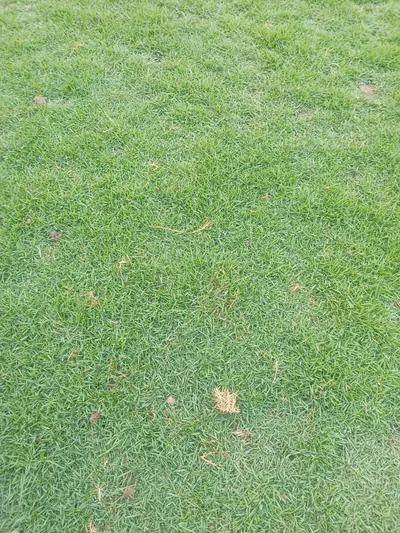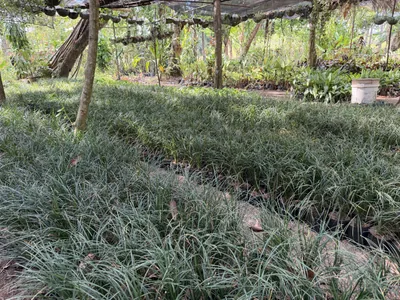
Frog Grass
Axonopus compressus
Also known as: Dwarf Carabao Grass, Carpet Grass, Kulape
The shade-tolerant, no-mow PH lawn grass. Frog grass is a dwarf, low-growing form of Axonopus compressus, the same species as carabao grass, so think 'carabao grass, but it stays short.' Holds up in partial shade and wet, poor soil where bermuda thins out. ₱100/sqm, dropping to ₱85/sqm above 10 sqm. Laid as sprigs (not clean blocks like blue grass), slow to fill in, and weeding-heavy. The honest pitch is a low-mow shade lawn for someone who will commit to the weeding.
Pricing Guide (per sqm)
| Size / Spec | Price (PHP) |
|---|---|
| 1-10 sqm | ₱100 |
| More than 10 sqm | ₱85 |
Volume Discounts
- 11+ sqm:₱85/sqm (from ₱100/sqm)
Prices reflect turf (plant material) only, sold per square meter. Orders above 10 sqm are charged at ₱85/sqm. Frog grass is laid as sprigs (loose pieces dusted with soil, rolled, and watered in), not as clean sod blocks, so installation is more labor-intensive than blue grass and quoted per project. It is slow to establish: gaps between sprigs can take a couple of months to close, and weed control during fill-in is essential. Soil preparation, delivery, and installation are quoted separately.
Request Project Quote →About Frog Grass
Frog grass is the Philippine vernacular name for a low, compact, shade-tolerant lawn grass best identified as a dwarf, low-growing form of Axonopus compressus, the broadleaf carpet grass. That is the same species the Philippines calls carabao grass (kulape), so frog grass is, in plain terms, the dwarf no-mow version of carabao grass: it stays at about 5 cm and rarely throws up the tall flowering stalks that make standard carabao grass look leggy. Per Plants of the World Online (Royal Botanic Gardens, Kew), Axonopus compressus is a carpet grass naturalized and ubiquitous across the Philippines.[^1] Its selling point is shade: it holds a lawn under trees, beside walls, and in courtyards where bermuda thins out, and it forgives wet and poor, acidic soil. The honest trade-off is that it is sprigged rather than blocked, slow to fill in, and weeding-heavy during its life. No PH seller attaches a botanical name to it, so we identify the grass by leaf and habit and confirm by a sod sample, never by the name alone.
Common Applications
- Shaded and semi-shaded lawns where bermuda fails. Under trees, beside walls, and in courtyards where sun-demanding turf thins out and goes leggy. This is frog grass's core use.
- Low-maintenance, no-mow residential lawns. For owners who want a green lawn without frequent mowing. Frog grass stays at 5 cm or under and barely needs cutting.
- Soft, walkable sit-on lawns. Coarse-but-comfortable texture that is fine for kids and bare feet, in low-traffic garden areas.
- Damp and poor-soil ground. Tolerates waterlogged spots and poor, acidic soil where richer turf struggles, a typical carpet-grass strength.
- Gap-filling and slow knit-in on low-traffic ground. Low lateral creep slowly closes bare areas, given patience and weed control.
- Budget low-input lawns. Cheaper than the fine zoysia, forgiving of poor ground, for owners who accept the slow establishment and weeding.
Where You'll See It
- Shaded residential lawns under tree canopy
- Courtyards and side yards beside walls and structures
- Damp, low-lying garden areas and run-off zones
- Budget low-maintenance lawns on poorer soil
- Low-traffic family lawns wanting a soft walkable surface
- Older established gardens where carabao grass has naturalized
Why Architects Choose It
- Genuine shade tolerance: holds a lawn where bermuda and zoysia thin out
- No-mow habit: stays at ~5 cm and rarely needs cutting
- Forgiving of wet and poor, acidic soil: a carpet-grass strength
- Comfortable underfoot: fine for kids and bare feet
- Cheap to buy and low-input once established
- Familiar: it is the dwarf form of carabao grass, so clients understand it instantly
Project Types Best Suited
- Shaded residential landscaping
- Budget and low-maintenance lawns
- Damp and poor-soil garden areas
- Courtyard and side-yard lawns
- Naturalistic and low-input gardens
- Gap-filling on existing carpet-grass lawns
Specifications
- Botanical name
- Axonopus compressus (Sw.) P.Beauv. (dwarf, low-growing form)
- Family
- Poaceae (grass family), subfamily Panicoideae
- Genus
- Axonopus (carpet grasses)
- PH trade names
- Frog grass; same species as carabao grass / kulape; loosely bundled with bermuda and 'Korean grass' by some sellers (confirm by leaf)
- Relationship to carabao grass
- Same species (Axonopus compressus). Frog grass is the dwarf low form; carabao is the taller, leggier, flowering form
- Native range
- Native to tropical America; naturalized and ubiquitous across the Philippines
- Habit
- Low, dense, fast-creeping carpet-grass mat; spreads by short ground stolons; stays low with almost no vertical growth
- Form sold
- Sprigs or loose sod by the square meter (propagated by division only; rarely sets viable seed)
- Blades
- Broad, flat, soft, blunt-tipped carpet-grass blades; mid-green; coarse-but-comfortable texture
- Height
- About 5 cm or under as a lawn; does not get leggy even in shade
- Mowing
- Minimal; the headline selling point. It barely needs cutting
- Growth rate
- Slow overall (slower than bermuda and carabao); all spread is low and lateral
- Sun
- Partial shade to full sun; holds in partial shade where bermuda thins, but does NOT survive dry shade
- Water
- Needs consistent moisture; tolerates waterlogging; suffers and browns at the tips in dry spells
- Soil
- Adaptable; tolerates poor and acidic soils; shallow soil over compacted aggregate plus traffic causes bald spots
- Salt tolerance
- Not a documented salt-tolerant turf; not recommended for coastal salt-spray sites
- Foot traffic
- Some foot traffic OR partial shade, but not both at once; heavy traffic compacts soil and causes bald spots
- Establishment
- Slow; gaps between sprigs can take ~2 months to close; weed control during fill-in is essential
- Pool safe
- Not recommended poolside; needs consistent moisture, prefers shade/damp, and sheds more than fine turf
Frog Grass (Axonopus compressus) Supplier in the Philippines
Frog grass is the Philippine name for a low, shade-tolerant, no-mow lawn grass, best identified as a dwarf, low-growing form of Axonopus compressus (broadleaf carpet grass). That is the same species the Philippines calls carabao grass (kulape), so the simplest accurate description is: carabao grass, but it stays short. It holds a lawn in partial shade and damp, poor soil where bermuda thins out, and it barely needs mowing.
We supply it at ₱100 per square meter, dropping to ₱85 per square meter above 10 sqm, and we confirm the grass by leaf and sod sample before you commit, because PH turf names are used loosely. For a finer, cleaner-install sun lawn, see our blue grass (fine zoysia) page.
What Frog Grass Is
Frog grass is a vernacular turf name for a low, compact, fast-creeping carpet grass sold by the square meter. The species is Axonopus compressus, specifically a dwarf form, and that is the same species as PH carabao grass. So frog grass is, in plain terms, the dwarf no-mow version of carabao grass. PH sellers do not usually attach a botanical name to it, so this page names it properly.
Do not confuse it with two things:
- Frogfruit (Phyla nodiflora). An entirely different plant, a creeping broadleaf groundcover (not a grass) used as a lawn alternative abroad. Similar-sounding name, unrelated plant.1
- The fine zoysia. Some sellers loosely tag frog grass “Korean grass,” which is the blue-grass zoysia, a botanically distant plant. Rule it out by the broad carpet blade.
The Trade-Name Tangle
PH turf names overlap badly, and frog grass is in the thick of it. One marketplace listing bundles “Frog Grass / Blue Grass / Carabao Grass / Bermuda Grass” under a single title; a Bulacan farm sells “Frog Grass, also called Korean Grass”; another account treats frog grass as separate from blue grass but describes it as a short carabao grass (the opposite family from zoysia).
Net: “frog grass,” “Korean grass,” “carabao grass,” “blue grass,” and “bermuda” get used loosely and sometimes bundled on one listing. The only reliable move, and our standing rule: identify by leaf and habit, confirmed by a sod sample, never by the name alone.
Botanical Identity
No PH seller assigns frog grass a binomial, but the plant is identifiable. The broad, soft, blunt carpet blade, the fast low lateral spread, the shade tolerance, and the “short carabao grass” resemblance all point to Axonopus compressus, the broadleaf carpet grass. The accepted name is Axonopus compressus (Sw.) P.Beauv. per Plants of the World Online.2 Crucially, A. compressus is the same species the Philippines calls carabao grass / kulape, so frog grass and carabao grass are not different species, they are the same plant in two growth forms:
- Frog grass is the dwarf, low form: stays at about 5 cm, rarely flowers, holds a tidy low lawn.
- Carabao grass is the standard taller form: foliage 15 to 20 cm with flowering culms 30 to 45 cm, leggier.
A nearby cousin, narrowleaf carpet grass (Axonopus fissifolius), is finer and less stoloniferous; A. compressus and A. fissifolius overlap and can hybridize, but the broad blade and fast spread point to compressus.3
Two honest caveats: “dwarf” is not a registered botanical cultivar name, so we cite the species (Axonopus compressus), not a fake cultivar; and the origin of the trade name “frog grass” itself is undocumented.
How to Confirm It by Eye
Use these tells to tell what a “frog grass” batch is:
- Frog grass (dwarf A. compressus): broad, flat, soft, blunt-tipped blades; low, dense, fast-creeping mat; stays short and rarely throws tall flowering stalks; thrives in shade and damp, poor soil.
- vs standard carabao grass (A. compressus, same species): the difference is form, not species. Carabao is taller, leggier, and sends up obvious flowering culms (30 to 45 cm). If it is flowering tall and standing up, that is standard carabao, not frog grass. The cleanest test: leave a patch unmowed, frog grass stays low.
- vs the fine zoysia (Korean / blue grass): zoysia blades are fine, stiff, sharp-pointed, dark green, denser and more cushioned, and sun-demanding, a completely different look from broad carpet blades.
- vs bermuda (Cynodon dactylon): bermuda has fine wiry blades, obvious runners, loves full sun, and goes leggy in shade. Frog grass has broad carpet blades and tolerates shade.
Characteristics
- Dwarf form of Axonopus compressus: broad, flat carpet-grass blades, kept low.
- Height about 5 cm or under; does not get leggy even in shade.
- Low, compact lateral creep by short ground stems; the laterals are obvious mainly when the grass climbs over something solid.
- Coarse-but-comfortable texture: not soft, not rough, fine for kids and bare feet.
- Slow grower, spreading only sideways. Slower than bermuda and carabao: it cannot outgrow weeds, and gaps between sprigs take a couple of months to close. Its one growth direction is low lateral creep. Honest expectation: slow.
- Propagated by division only (sprigs and plugs); rarely sets viable seed.
- Tolerates partial shade and some foot traffic, but not both at once.
Growing Conditions in the Philippines
- Light: partial shade to full sun. Holds in partial shade where bermuda thins, but does not survive dry shade.
- Water: needs consistent moisture. Tolerates waterlogged spots; dry conditions hurt it and summer browns the leaf tips.
- Soil: adaptable; tolerates poor and acidic soils. Shallow soil over compacted aggregate plus traffic creates persistent bald spots.
- Tolerance limits: partial shade OR some foot traffic, not both together. Survives wet and average light; does not survive dry shade.
- Fertilizer: debatable value. The slow grass takes up feed slower than weeds do, so feeding mostly helps the weeds. Light at most.
- Establishment: by sprigs, not blocks. Clear all weeds first and wait a few days for re-sprouts before laying.
Installation and Upkeep (the operator-honest part)
This is the genuine differentiator from blue grass, and buyers should hear it up front.
- Laid as sprigs, not blocks. Loose pieces are laid on prepared soil, dusted with soil, rolled flat, then watered heavily until they root. A full lawn arrives as sacks of sprigs laid by a team over a few days. Harder and slower to install than blue grass, which goes down like tiles.
- Prep is everything. Check elevation, bring in fine sieved soil, build subtle run-off channels, and remove every weed first, then wait a few days to catch re-sprouts before laying.
- Establishment is slow. Visible soil gaps between sprigs can take a couple of months to close. It is not an instant lawn.
- Upkeep is mostly weeding. The slow grass loses ground to faster weeds, so plan a regular weeding regime (one grower runs ~3 people for one day every two weeks).
- Periodic refresh. Every 3 to 4 years, lift and relay tired sections; good sprigs can be reused, so refresh mostly costs labor.
- Rolling smooths it. Roll with a concrete roller when the ground is soft (not mushy) to flatten knobby dimples.
The pitch is not “instant lawn.” It is “a low, no-mow, shade-friendly lawn for someone who will commit to the weeding, or pay you to.”
Frog Grass vs the Other PH Turf Grasses
- vs Bermuda (Cynodon dactylon): frog grass tolerates shade and needs far less mowing; bermuda needs full sun and frequent mowing but takes heavier traffic and recovers faster.
- vs Carabao grass (Axonopus compressus): same species. Frog grass is the dwarf low form; carabao is the standard taller, flowering, leggier form. Same plant, two growth forms, sold as two products. Customers who know carabao grass instantly understand frog grass as “the low, no-mow version.”
- vs Blue grass / Korean grass (fine Zoysia matrella): zoysia is finer, denser, more manicured, more sun-loving, and comes as clean easy-to-lay blocks that look uniform immediately, but it is pricier. Frog grass is more shade-tolerant, lower-mow, cheaper, and forgiving of wet and poor soil, but it is sprigged, slow to establish, and weeding-heavy. (Some sellers call frog grass “Korean grass” too, so confirm by the broad carpet blade.) See the blue grass page.
Care Highlights
- Mowing: minimal. It stays at 5 cm or under, the headline selling point.
- Water: keep consistently moist; tolerates waterlogging but suffers in dry spells. Water mornings or evenings, never midday heat.
- Weeds: the real job. Plan regular weeding; common invaders are standard carabao, bermuda, sedges, and Paspalum.
- Fertilizer: light at most; arguably optional.
- Pests: sod webworm caterpillars can kill big sections fast; treat with lawn insecticide and the grubs surface within minutes.
- Bald spots: fix with deep healthy sod plugs, not sprigs; fertilizer and shade do not fix them.
- Herbicide caution: one grower reports only Agroxone (MCPA selective) was safe and other products killed the grass slowly. Treat as one grower’s experience: spot-test, read labels, and do not let anyone apply an untested “lawn-safe” herbicide.
Sources
Footnotes
-
For the unrelated look-alike name, Phyla nodiflora (“frogfruit”) is a creeping broadleaf groundcover, not a grass. Flagged only to prevent name confusion. Accessed 2026. ↩
-
Plants of the World Online (POWO), Royal Botanic Gardens, Kew. “Axonopus compressus (Sw.) P.Beauv.” Accepted; broadleaf carpet grass, the PH carabao grass / kulape. Accessed 2026. https://powo.science.kew.org/taxon/urn:lsid:ipni.org:names:392087-1 ↩
-
NC State Extension / Tropical Forages references on Axonopus. A. compressus common names include “carabao grass, kulape (Philippines)”; more stoloniferous than narrowleaf A. fissifolius, from which it cannot always be cleanly separated due to leaf-width overlap and hybridization. Accessed 2026. https://plants.ces.ncsu.edu/ ↩
We plant and install this
Halamanan supplies and installs Frog Grass as part of our landscape design and landscape construction projects. We source the plants, place them in the design, and plant them with the rest of the garden.
Sourcing & Supply
Origin
Sourced as a shade-tolerant low-growing lawn grass from Luzon turf growers and nurseries that sell it per square meter as sprigs or loose sod. It is the dwarf form of Axonopus compressus (carabao grass), propagated by division (sprigs and plugs); it rarely sets viable seed, so what is laid is vegetative material, not a sown lawn.
Supplier Relationship
Working relationships with multiple growers and nurseries; thickness of the sod varies with availability, so larger shaded-lawn orders are coordinated across yards when single-source stock is thin.
Quality Control
We confirm the grass is the broad-bladed carpet grass (dwarf Axonopus compressus) by leaf texture and an actual sod sample before delivery, not by the trade name. PH sellers use 'frog grass' loosely and sometimes bundle it on one listing with bermuda, carabao, and 'Korean grass' (the unrelated fine zoysia). We rule out the fine zoysia by the broad, soft, blunt carpet blade, and rule out standard carabao by the low, non-flowering dwarf habit. Sprigs are screened for weed contamination before delivery.
Frequently Asked Questions
What is frog grass in the Philippines?
Frog grass is a Philippine vernacular name for a low, compact, shade-tolerant lawn grass best identified as a dwarf, low-growing form of Axonopus compressus, the broadleaf carpet grass. That is the same species the Philippines calls carabao grass (kulape), so frog grass is essentially the dwarf, no-mow version of carabao grass: it stays at about 5 cm and rarely sends up the tall flowering stalks that make standard carabao grass leggy. Its main use is as a lawn for shaded and damp areas where bermuda and zoysia thin out.
How much does frog grass cost per square meter in the Philippines?
Our frog grass is ₱100 per square meter, dropping to ₱85 per square meter for orders above 10 sqm. That is the turf (plant material) only. Frog grass is laid as sprigs rather than clean sod blocks, so installation is more labor-intensive than blue grass and is quoted per project along with soil preparation and delivery. It prices in the mid PH turf range, above plain carabao grass and around or a bit below the fine zoysia (blue grass).
Is frog grass the same as carabao grass?
Yes, the same species: both are Axonopus compressus. The difference is growth form, not species. Frog grass is the dwarf, low-growing form that stays at about 5 cm and rarely flowers; standard carabao grass is the taller, leggier form that sends up obvious flowering culms (30 to 45 cm). The clearest test: leave a patch unmowed. Standard carabao stands up and flowers on tall stalks; the dwarf frog form stays low. So 'carabao grass, but shorter' is literally accurate.
Is frog grass the same as blue grass or Korean grass?
No, completely different plants, despite some sellers loosely bundling the names. Frog grass is a broad-bladed carpet grass (Axonopus compressus, the carabao-grass species). Blue grass, often called Korean grass, is the fine zoysia (Zoysia matrella), a botanically distant grass with fine, stiff, sharp-pointed dark-green blades. Tell them apart by the blade: frog grass has broad, soft, blunt carpet blades; blue grass has fine, stiff, pointed ones. See our [blue grass page](/plants/blue-grass/) for the fine sun lawn.
Is frog grass good for shade?
Yes, that is its main strength. Frog grass holds a lawn in partial shade, under trees, beside walls, and in courtyards where bermuda thins out and goes leggy. The important limit: it tolerates partial shade OR some foot traffic, but not both at once, and it does NOT survive dry shade. It needs consistent moisture. For a shaded, low-traffic, low-mow lawn it is the PH go-to answer.
How fast does frog grass grow and spread?
Slowly. Frog grass is slower than bermuda and carabao grass: it cannot outgrow weeds, and gaps between sprigs can take a couple of months to close, with persistent bald spots sometimes lingering. Its only fast direction is horizontal, low lateral creep, because it puts on almost no height. So it reads as 'spreads fast' next to its own near-zero vertical growth, but it is slow next to other turf grasses. Set expectations for a slow establishment that rewards patience and weed control, not an instant lawn.
How is frog grass installed?
As sprigs, not clean sod blocks. Loose pieces are laid on prepared soil, dusted with soil on top, rolled flat, then watered heavily until they root. A full lawn arrives as sacks of sprigs and a team lays it over a few days. Prep is everything: clear all weeds first, wait a few days to catch any that re-sprout, level with fine sieved soil, and build subtle run-off channels. Skip the weed prep and weeds come back through the slow grass. This makes frog grass harder and slower to install than blue grass, which goes down like tiles.
How much maintenance does a frog grass lawn really need?
Low mowing, but high weeding. Mowing is minimal because it stays at 5 cm or under. The real lifetime cost is weeding: because the grass is slow, faster weeds (standard carabao, bermuda, sedges, Paspalum) steadily invade, so an established lawn typically needs regular weeding (one experienced grower runs about 3 people for one day every two weeks). Keep it consistently moist, watch for sod webworm caterpillars that can kill patches fast, and fix persistent bald spots by dropping in deep healthy sod plugs, not sprigs.
Does frog grass need fertilizer?
Light at most, and arguably optional. One long-term grower fertilized quarterly for years, then stopped for over two years, concluding the slow grass takes up fertilizer slower than the weeds do, so feeding mostly helps the weeds. Treat fertilizer as optional and light, and put the effort into weed control and consistent watering instead.
Frog grass vs blue grass: which should I choose?
Choose by sun and tolerance for install effort. Blue grass (fine zoysia) is finer, denser, more manicured, more sun-loving, and comes as clean easy-to-lay blocks that look uniform immediately, but it costs more and wants sun. Frog grass (carpet grass) is more shade-tolerant, lower-mow, cheaper, and forgiving of wet and poor soil, but it is sprigged rather than blocked, slow to establish, and weeding-heavy. In short: sunny, want it clean and instant, pick blue grass; shaded, want no-mow and cheap, and will commit to weeding, pick frog grass.
Is frog grass the same as frogfruit?
No. Frogfruit (Phyla nodiflora) is an entirely different plant, a creeping broadleaf groundcover (not a grass) used as a lawn alternative abroad. The similar-sounding name causes confusion, but frog grass is a true grass (Axonopus compressus), the carabao-grass species. They are unrelated.